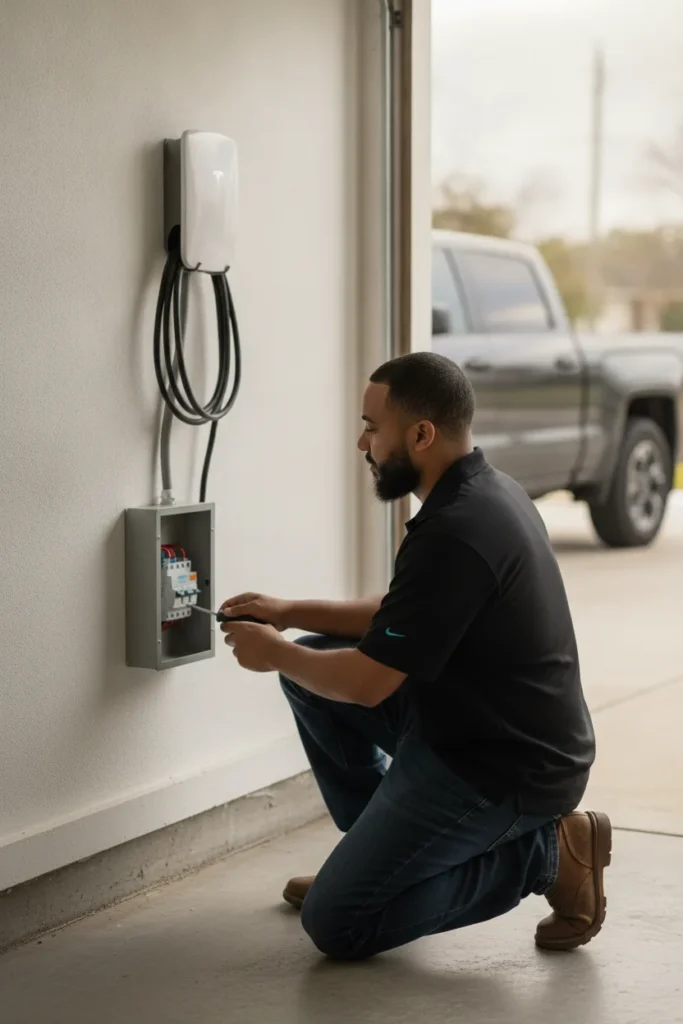
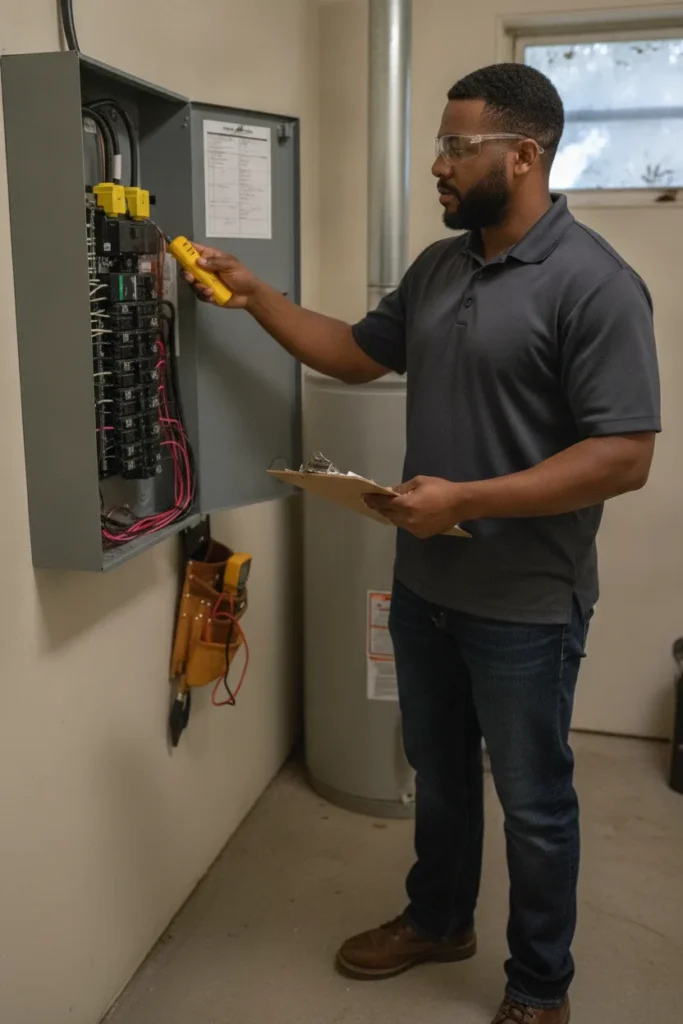
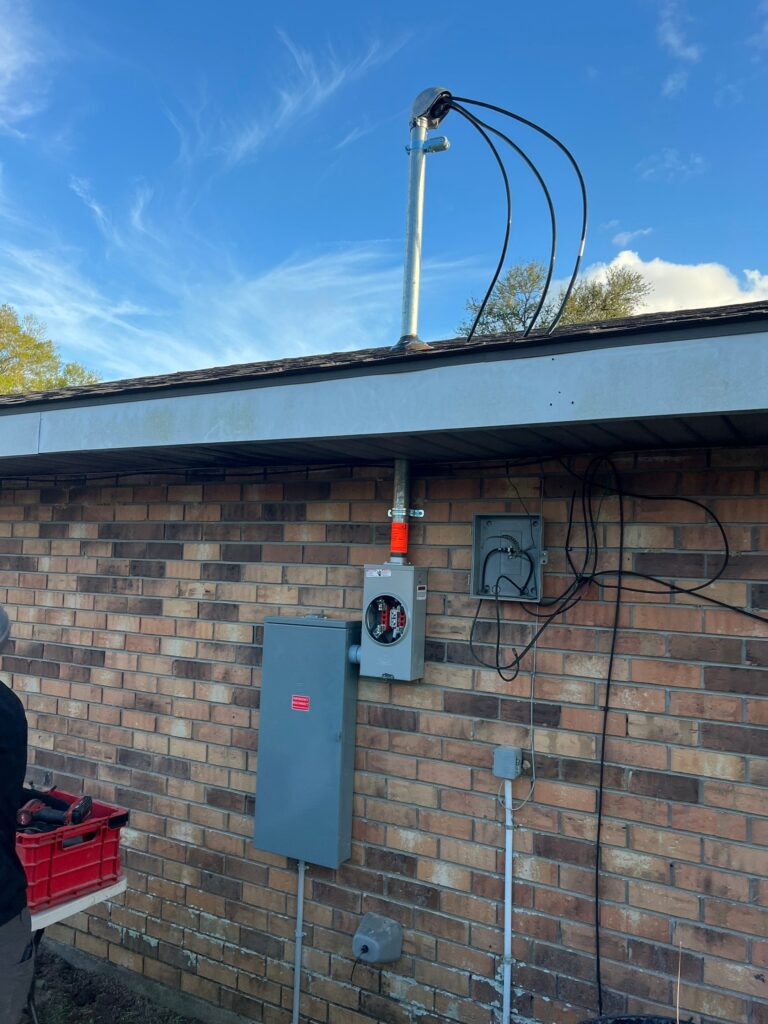
EV charger installation in Lake Charles
EV adoption in Southwest Louisiana is steady. We install Level 2 home chargers for Tesla, Ford F-150 Lightning, Rivian, Chevy, Kia, Hyundai, BMW, Mercedes, and most other current EVs. The install is more involved than a 220V dryer plug because the charger sees continuous load (NEC 625 treats EV charging as a continuous load, meaning the breaker is sized at 125 percent of the charger rating) and because the equipment needs proper grounding and disconnect.
Level 1 vs Level 2 vs DC fast
Level 1 is a standard 120V household outlet. Plug the car in overnight and you get roughly 4-5 miles of range per hour. Adequate for a short commute, useless for a long drive home.
Level 2 is 240V on a dedicated circuit. 32A charger delivers around 25 miles per hour. 40A delivers around 32 miles per hour. 48A (the maximum for most home installs) delivers around 38-40 miles per hour. Overnight at Level 2 typically fills the battery from any state of charge.
DC fast charging is commercial-grade 480V three-phase equipment at 50kW-350kW. Not residential. Not what we install at homes. We do install DC fast charging at light commercial sites (fleet yards, hotels with EV parking).
NEMA 14-50 plug-in or hardwired?
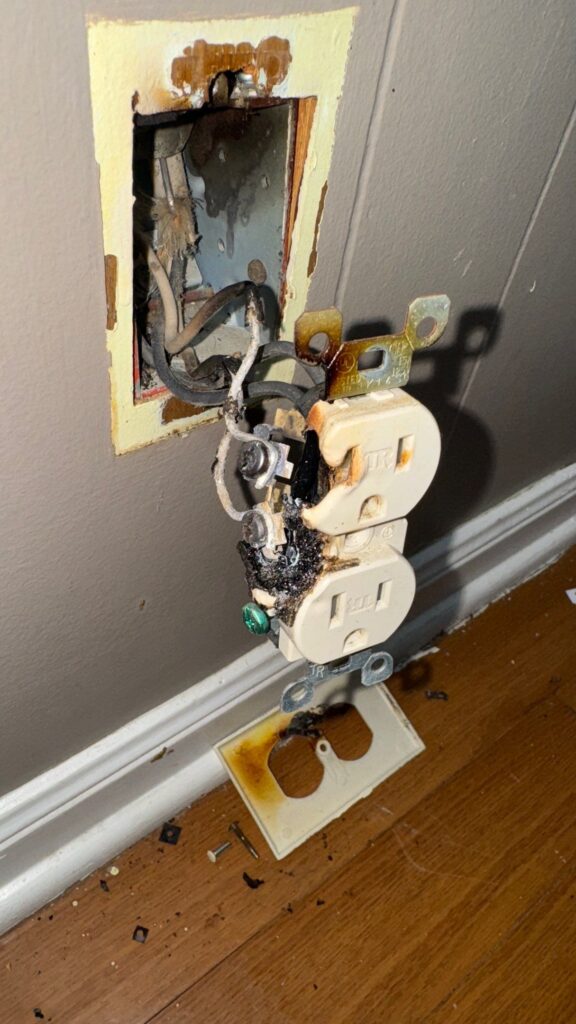
Plug-in install on a NEMA 14-50 receptacle: the charger plugs into a 50A receptacle on a 50A breaker. Maximum continuous load is 40A (80 percent of 50A per NEC 210.19). Most popular for the flexibility (you can unplug and travel with the charger). Receptacle must be rated for continuous duty (not all 14-50 receptacles are, and a cheap one will overheat under continuous EV load). We use industrial-grade 14-50 receptacles for this install.
Hardwired install: the charger is wired directly to the panel through a disconnect or breaker. Allows higher amperage (48A delivered on a 60A breaker, vs 40A on a 50A breaker plug-in). Cleaner appearance. Required by some manufacturers for the highest charging rate. We hardwire most installs above 40A.
Load calc and panel capacity
Before we install, we do a load calc per NEC 220. A 200A service can usually handle a 40A or 48A EV charger if the rest of the loads (AC, range, dryer, water heater) leave headroom. A 100A service typically cannot handle a 40A EV charger on top of central AC and electric appliances. The options on an undersized service are: (1) upgrade to 200A, (2) install a load-managing charger that throttles when other loads are running, or (3) install a smaller charger (24A or 32A) that fits within the available capacity.
Load-managing chargers (also called “load-shedding” or “smart-circuit” chargers) measure the whole-house load at the panel and automatically throttle the EV charging when the AC, range, or dryer is running. These are useful on 100A and undersized 200A services and can avoid a panel upgrade.
GFCI, disconnect, and code requirements
NEC 625 covers EV supply equipment. Key requirements:
- Dedicated branch circuit, sized for continuous load at 125 percent of charger rating per NEC 625.41
- GFCI protection per the equipment listing (most hardwired EVSE includes internal GFCI; plug-in 14-50 receptacles require a GFCI breaker per current NEC 210.8)
- Disconnect within sight of the equipment (or lockable disconnect at the panel)
- Wet location rating for outdoor installs
- Proper grounding per NEC 250
Cable type and run length
For runs from the panel to the garage we use NM cable in protected interior spaces, or THHN in conduit for longer runs and exterior. 8 AWG copper for 40A circuits, 6 AWG copper for 50A and 60A circuits. Aluminum is allowed but we use copper for the smaller residential sizes because the lug terminations are less prone to creep failure over time. Voltage drop matters on runs over 100 feet and we upsize a gauge on long runs.
Hurricane and backup power considerations
EV chargers do not work during a power outage. After Laura and Delta in 2020, customers with EVs lost charging for weeks in some areas. If you depend on your EV and you live in a hurricane-prone area, consider a transfer switch arrangement that backs up the EV charging circuit (not always practical because of the load size), or plan to drive to a working DC fast charger during recovery. We can quote both options.