Generators and backup power in Lake Charles
Hurricane Laura made landfall as a Category 4 in 2020. Hurricane Delta hit six weeks later on essentially the same track. Tens of thousands of homes in Calcasieu, Cameron, and Jeff Davis parishes were without power for weeks, some for more than a month. Generator demand has stayed high in Southwest Louisiana ever since because the people who lived through Laura and Delta do not want to live through another one without backup power.
We install standby generators (the permanently mounted units on a pad that auto-start during outages), portable generator transfer switches, and battery backup systems. Each has its place.
Standby generators
How they work
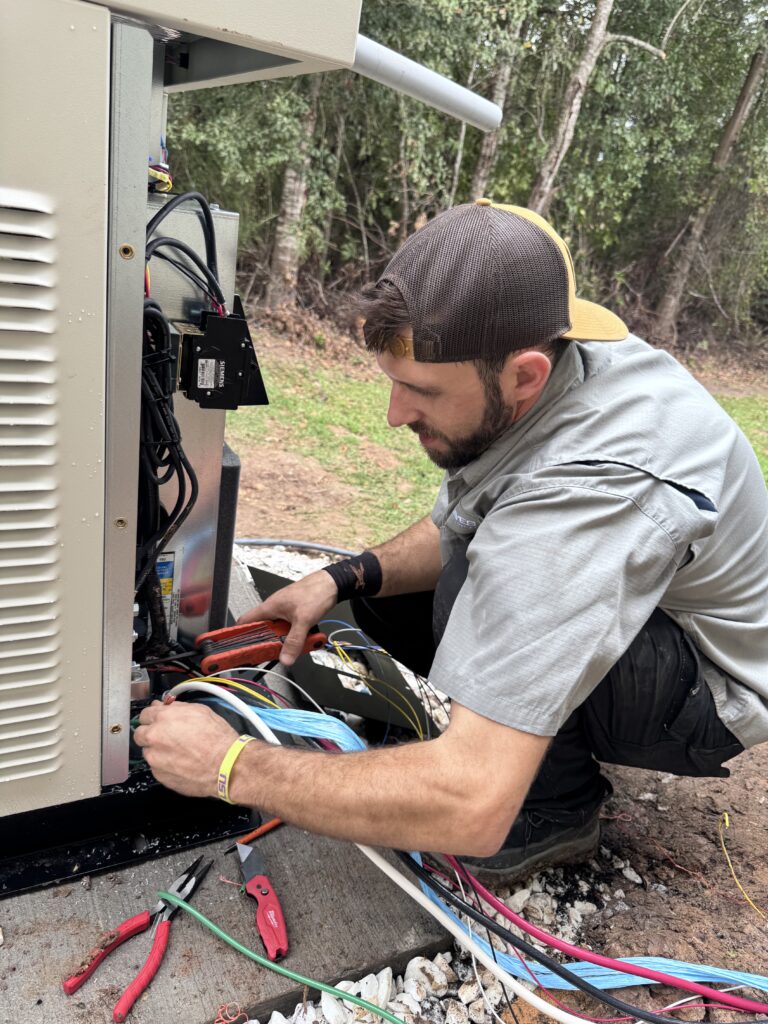
A standby generator sits on a concrete pad outside the home, connected to natural gas or LP, with an automatic transfer switch (ATS) at the main panel. When utility power fails, the ATS senses the outage, signals the generator to start, waits for the engine to come up to voltage and frequency, then transfers the load from utility to generator. When utility power comes back, the ATS waits for the utility to stabilize, transfers the load back, and signals the generator to cool down and shut off. The whole sequence is automatic.
Sizing
Generator sizing depends on the loads you want to back up. Whole-house coverage on a typical 2,000-2,500 sq ft Louisiana home with central AC, electric range, electric dryer, and electric water heater needs 22-26kW. Partial coverage of essential loads (AC, refrigerator, freezer, well pump, a few lighting circuits, internet) can run on 14-18kW. Cabin or small-home coverage runs on 9-11kW. We do a load study based on the actual circuits you want to cover and size the generator to that.
Equipment brands
Generac is the largest residential standby brand. Kohler is more expensive and generally better-built. Briggs and Stratton, Cummins, and Champion are also in the market. We install Generac most often because parts availability across Louisiana is best, but we can install other brands on request.
Placement and code
NFPA 37 requires 5ft clearance from the generator enclosure to combustible walls and openings (doors, windows). Some installations meet the clearance with a fire-rated barrier or by mounting on a non-combustible surface. The generator needs a fresh air intake and exhaust path that does not blow into a window or HVAC intake. We pick the placement during the walk-through and confirm it meets NFPA 37 and the manufacturer instructions.
Gas connection
Natural gas connection requires a permit and coordination with the gas company (Entergy Louisiana Gas in most of Lake Charles). LP requires a tank sized for the generator runtime (typically 250-500 gallon for a multi-day outage). Gas piping is sized for the BTU demand of the generator at full load, per NFPA 54 (natural gas) or NFPA 58 (LP). A gas contractor handles the gas line, we handle the electrical.
Automatic transfer switch (ATS)
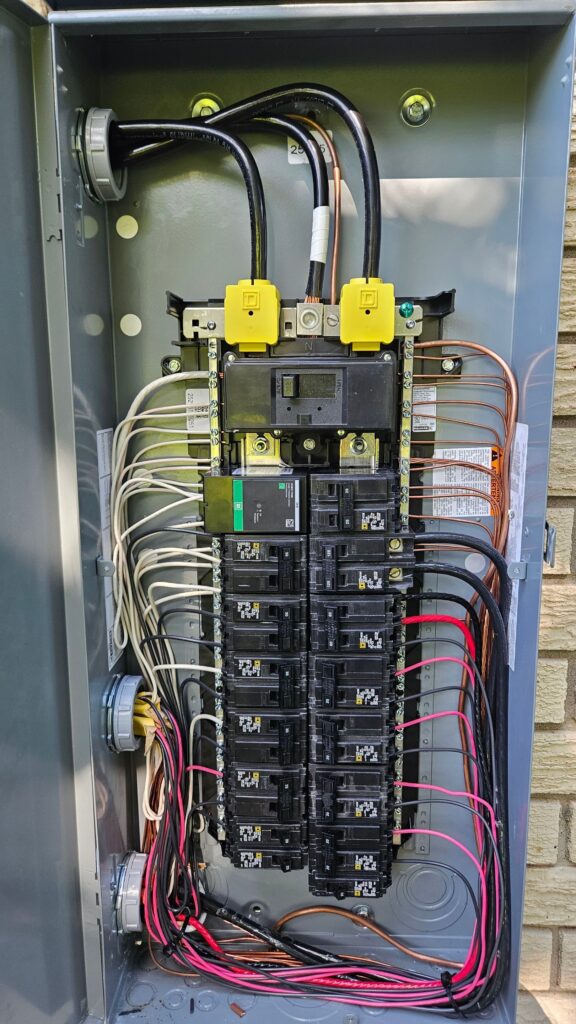
The ATS is the brain of the system. It senses utility status, signals the generator, and transfers the load. NEC 702 covers optional standby systems and NEC 702.5 covers the interconnection. We install a service-entrance-rated ATS on most residential installs (which lets the ATS sit between the meter and the panel and back up the whole house), or a sub-panel-rated ATS for partial-coverage installs (which sits between the main panel and a critical-loads sub-panel).
Portable generator transfer switches
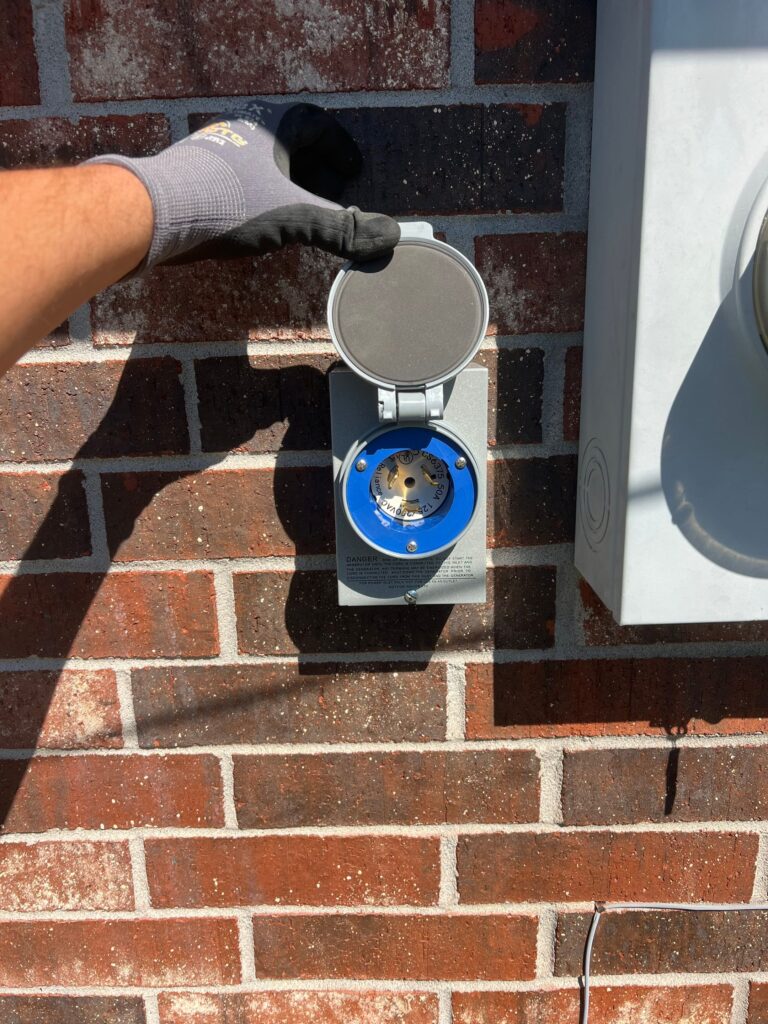
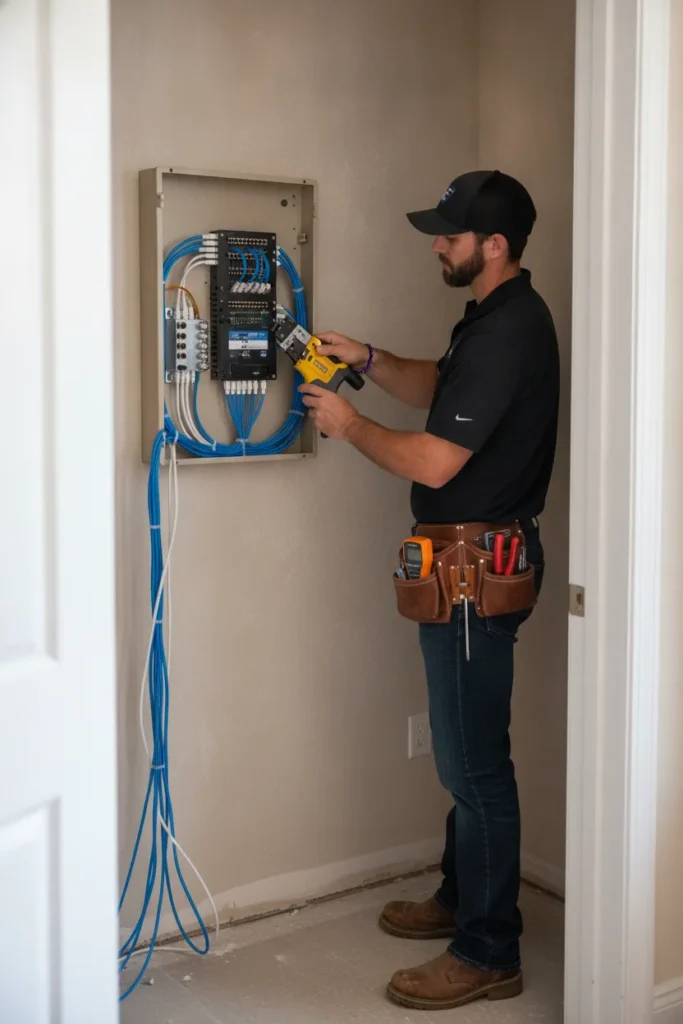
If you already own a portable generator (or plan to buy one), we install a manual transfer switch that lets you safely back-feed your essential loads without the dangerous “suicide cord” approach. The manual switch isolates the house from the grid (preventing back-feed that can kill utility line workers) and lets you power selected circuits from the portable. Typical setup is a 6-10 circuit manual transfer switch in a panel next to the main, with an inlet receptacle on the exterior wall for the generator cord.
Battery backup
Tesla Powerwall, Enphase, Generac PWRcell, FranklinWH, and similar battery systems. Useful for short outages (4-24 hours) and for solar self-consumption. Less useful for week-long hurricane outages unless paired with solar that can recharge the batteries during the outage. We install battery backup as a complement to standby generators, not a replacement, in Lake Charles climate where outages can last 1-4 weeks after a major storm.
Maintenance
Standby generators need oil changes every 100-200 hours of runtime or annually, whichever comes first. The engine runs a weekly self-test (typically 5-10 minutes) and that adds up. We offer maintenance contracts that include the annual service, oil and filter changes, battery testing, and an exercise mode check. Skipping maintenance is how generators fail to start when you need them.