Panel and breaker work in Lake Charles
The panel is the heart of the system. Every circuit in the building comes back here. When it works you forget it exists. When it fails it can take the building with it. A lot of our work in Lake Charles is panel replacement and breaker repair, particularly on homes built between 1955 and 1985 where the original panel is at or past end of life.
Panels we replace and why
Federal Pacific Stab-Lok
Installed widely from the 1950s into the 1980s. The Stab-Lok breaker has a documented failure-to-trip history under overload, traced to a wedge design that mechanically binds when warm. Independent testing showed elevated failure rates compared to other brands. The fix is not breaker-by-breaker replacement. The fix is full panel replacement. Insurance carriers in Louisiana increasingly require this on policy renewal.
Zinsco (also branded Sylvania-Zinsco and GTE-Sylvania)
Installed 1960s through early 1980s. The Zinsco design uses aluminum bus bars with a coating that can corrode and arc internally. Breakers can fuse to the bus and become impossible to remove without damaging the panel. Buzzing, hot breakers, and discoloration on the dead front are all warning signs. Like Federal Pacific, the fix is replacement.
Challenger
Installed late 1980s into the 1990s. Documented failure pattern on certain GFCI and AFCI breakers, including failure to trip. We evaluate Challenger panels case by case but on any home with active symptoms we recommend replacement.
Aging Square D QO, Eaton BR, Siemens, and other modern brands
Modern panels are not on the failure list, but a 35-year-old panel of any brand is at or near the end of useful life. Breakers age, lugs loosen, the bus bar oxidizes. If a modern panel is the right brand but is showing problems (multiple tripped breakers, hot lugs, double-tapped breakers), the answer is often repair plus targeted breaker replacement rather than full panel replacement.
What a panel change involves
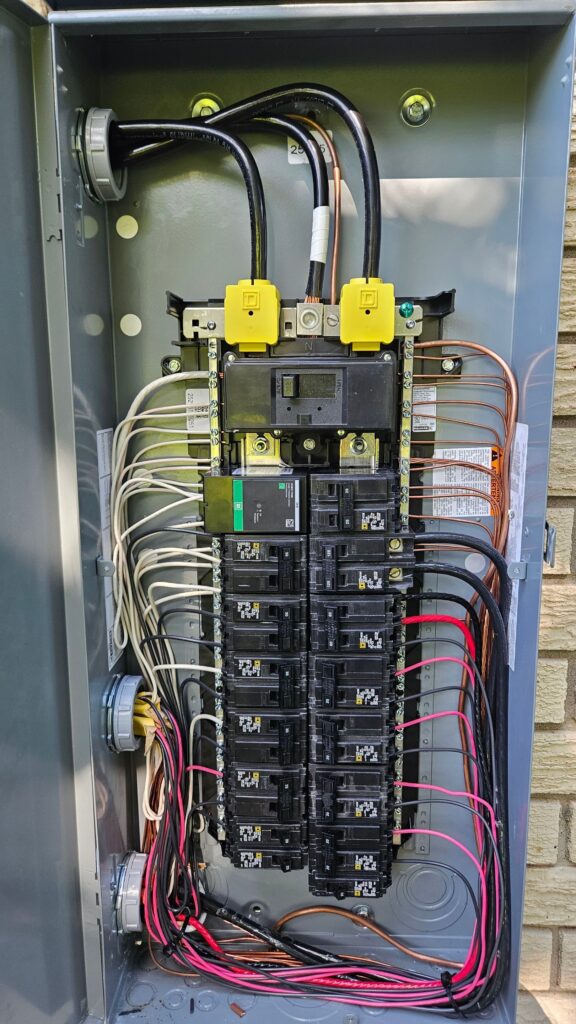
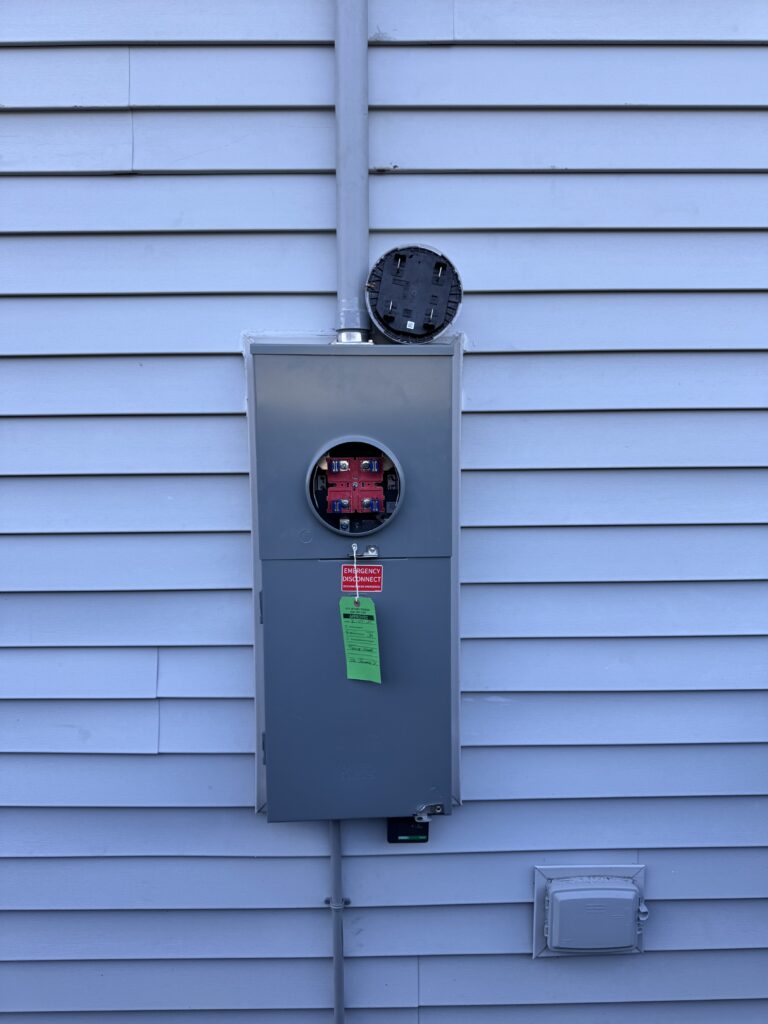
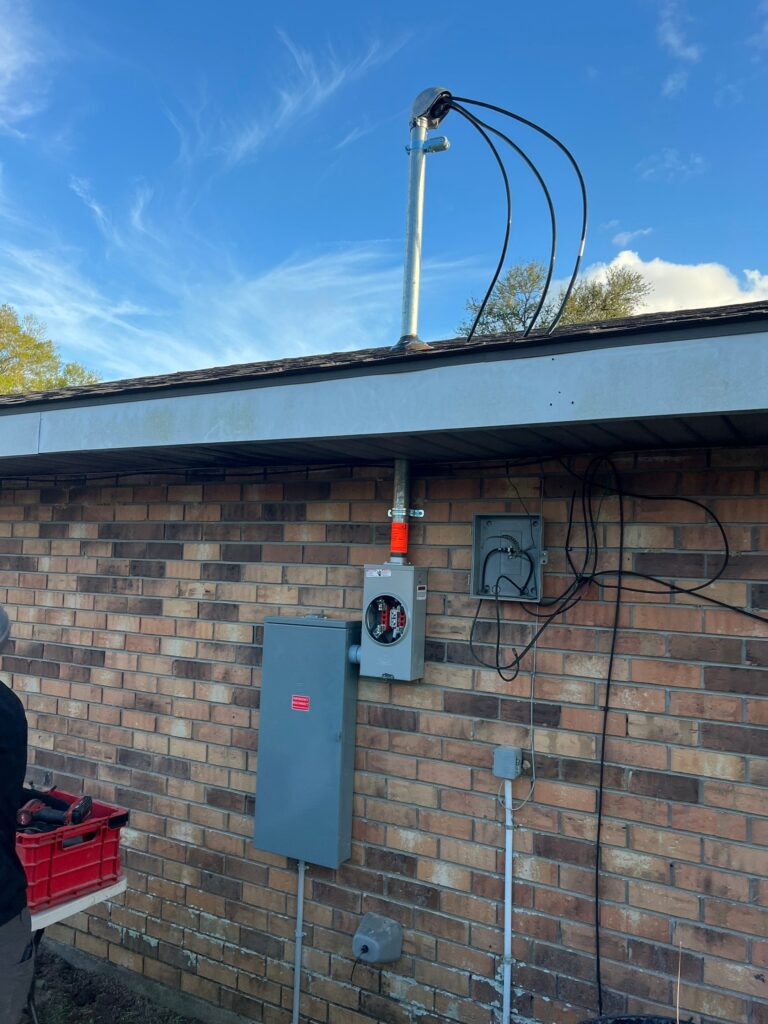
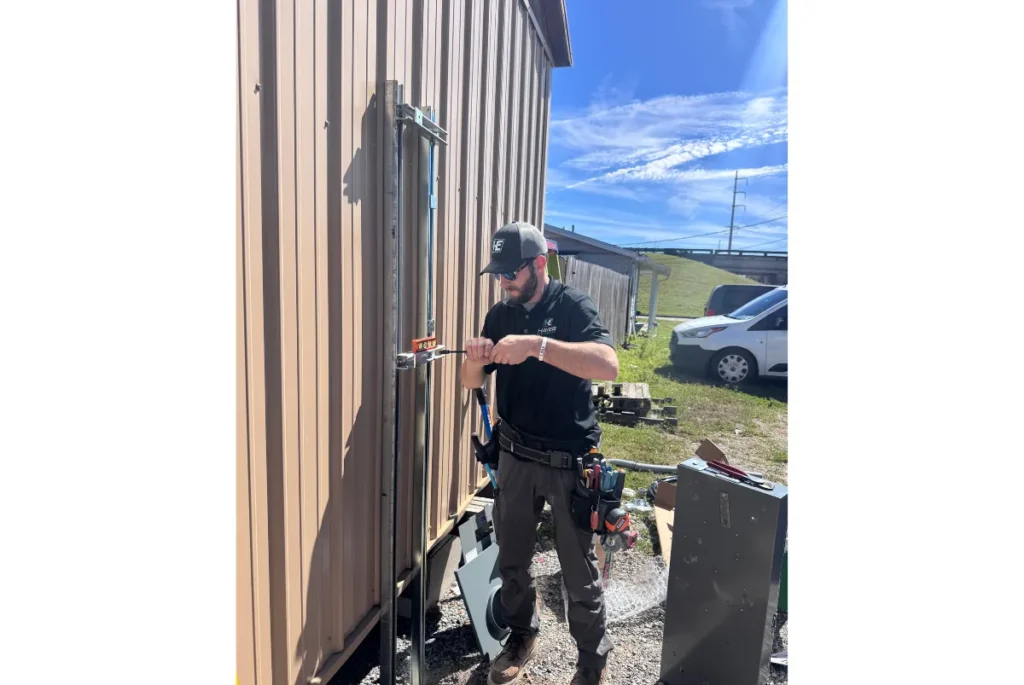
A panel change is a one-day project for most residential. We schedule the Entergy disconnect, kill the main, swap the panel and breakers, re-land every circuit on the new panel, torque to spec, label the panel schedule, ground per NEC 250, and call for inspection. After the inspector signs the permit, Entergy reconnects the meter. Total power-off window is typically 6-10 hours.
What we bring up to code on a panel change
The panel change is the time to bring the rest of the system up to current code. We install AFCI and GFCI breakers per NEC 210.8 and 210.12 where the circuits require them. We install a Type 2 surge protective device per NEC 285. We verify the main bonding jumper at the service per NEC 250. We pull a new grounding electrode conductor sized per NEC 250.66. We test the ground rod resistance per NEC 250.53 (must be under 25 ohms or supplement with a second rod). We confirm the panel working clearance per NEC 110.26 (36 inches deep, 30 inches wide, 6.5 feet high).
Sub-panels for additions and detached buildings
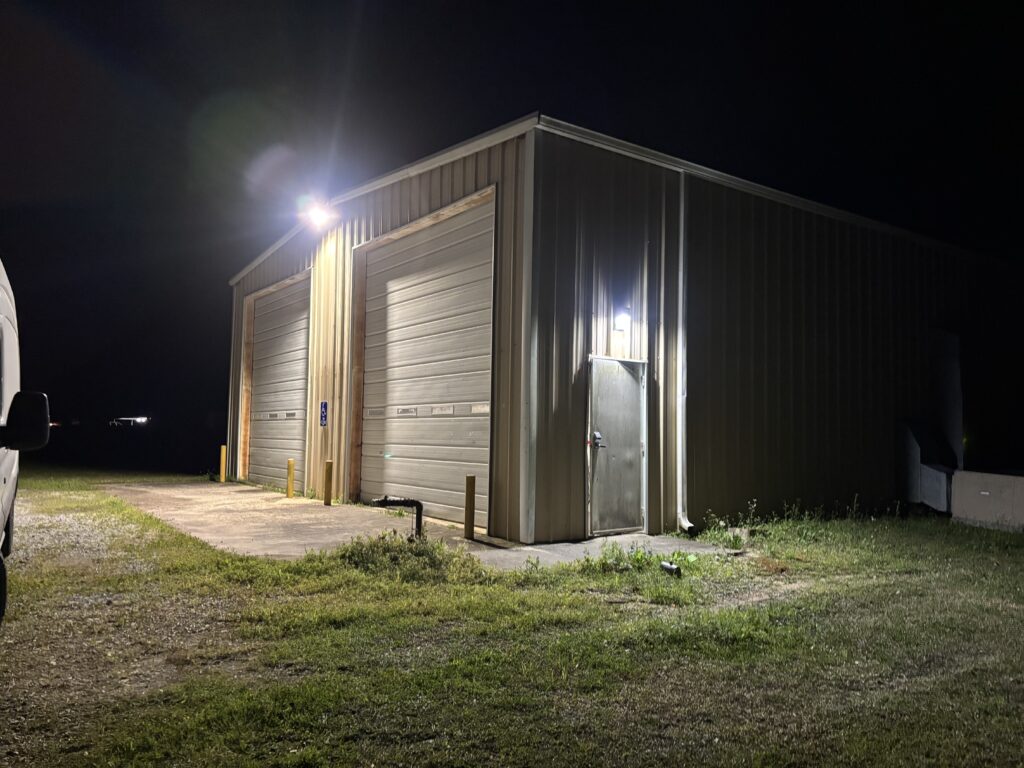
When you add a garage, a workshop, an addition, or a pool house, the sub-panel is fed from the main with a 4-wire feeder (two hots, neutral, ground). The sub-panel does NOT have a main bonding jumper. The neutral and ground are isolated at the sub-panel. NEC 250 is specific about this and inspectors look for it on every sub-panel install. We do feeders to detached buildings with direct-burial UF cable or in PVC conduit, sized per the load calc and the run length (voltage drop matters).
Breaker selection and torque
Breakers are not interchangeable. A Square D QO breaker does not fit a Homeline panel even though both are Square D. A breaker rated for a competitor panel (“UL Classified” breakers) is technically allowed in some panels but most manufacturers void the warranty. We use the breaker the panel manufacturer specifies. We torque every breaker to the spec on the panel label (typically 35-50 in-lb for residential breakers). Missed torque is one of the most common causes of breaker failure.