Commercial electrical contracting in Southwest Louisiana
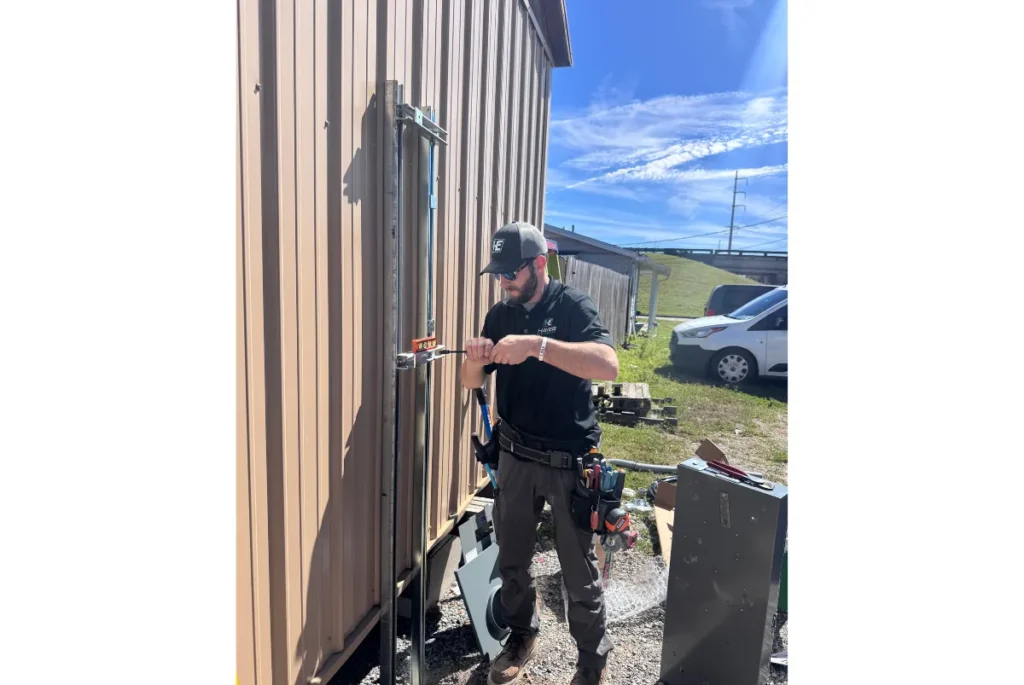
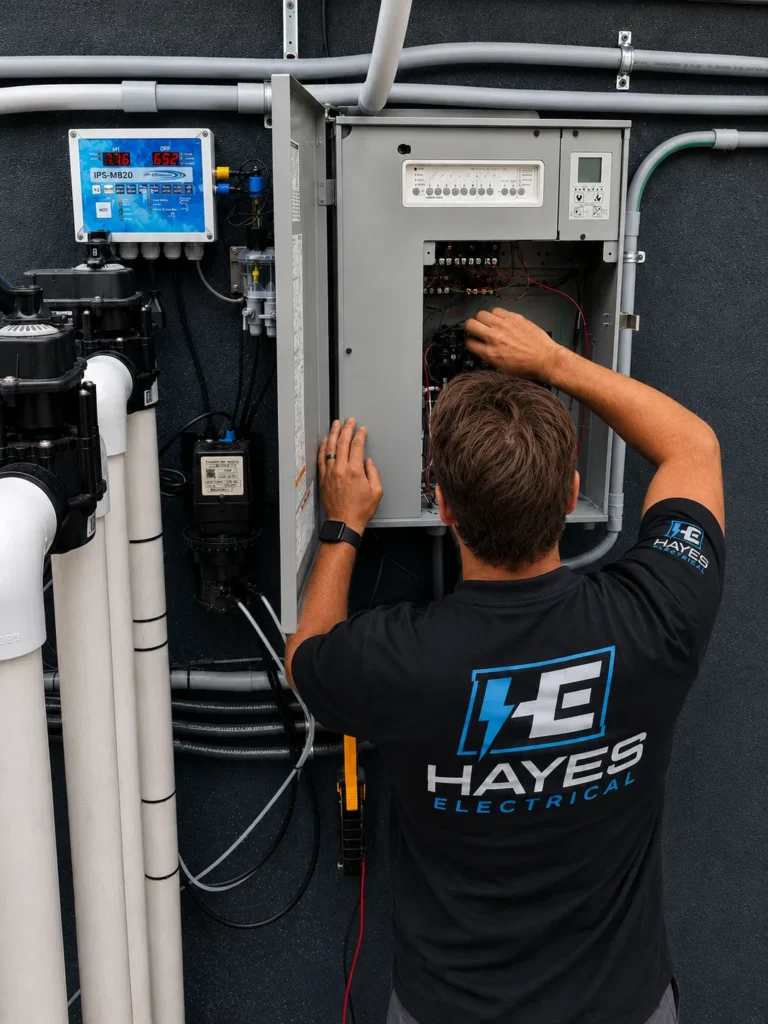
Commercial work is different from residential. The loads are bigger. The code path is wider (NEC plus NFPA 70, 72, 110 for fire alarm and emergency power, plus the local building code). The stakeholders include the GC, the architect, the building owner, the tenant, the fire marshal, the AHJ inspector, and the utility. We carry the Louisiana State Licensing Board for Contractors (LSLBC) electrical license required for commercial work above the parish threshold, and we run jobs from small tenant fit-outs through full building wiring.
What we do on commercial
Tenant build-outs and fit-outs
Retail, office, medical, and restaurant tenant spaces in existing buildings. We tap an existing house panel or pull a new sub-panel, run branch circuits to fit the floor plan, install lighting per the design, set the panel schedule, and coordinate with the GC for inspection and turnover. Most of our fit-outs are turnkey from rough-in through trim and we hit the GC schedule.
Restaurant and food service
Restaurants have heavy stacked loads (hood exhaust, walk-in compressors, large griddles, fryer banks, dishwashers) and a careful load calc per NEC 220 is the difference between a working kitchen and one that trips the main on Friday night. We size the service for the equipment cut sheets, install dedicated circuits per the equipment manufacturer, and coordinate with the hood vendor and the gas contractor. Hood exhaust often runs from a shunt-trip breaker tied to the suppression system per NFPA 96 / 72.
Office, retail, and medical
Lighting per the design (often LED troffers, can lighting, or pendants), receptacle circuits per NEC 210.11, dedicated circuits for copiers and servers, low-voltage rough-in for networking, and emergency lighting per NFPA 101 and the local building code. Medical office work includes hospital-grade receptacles in patient areas and dedicated isolated-ground circuits for imaging equipment when the cut sheets require them.
3-phase service equipment
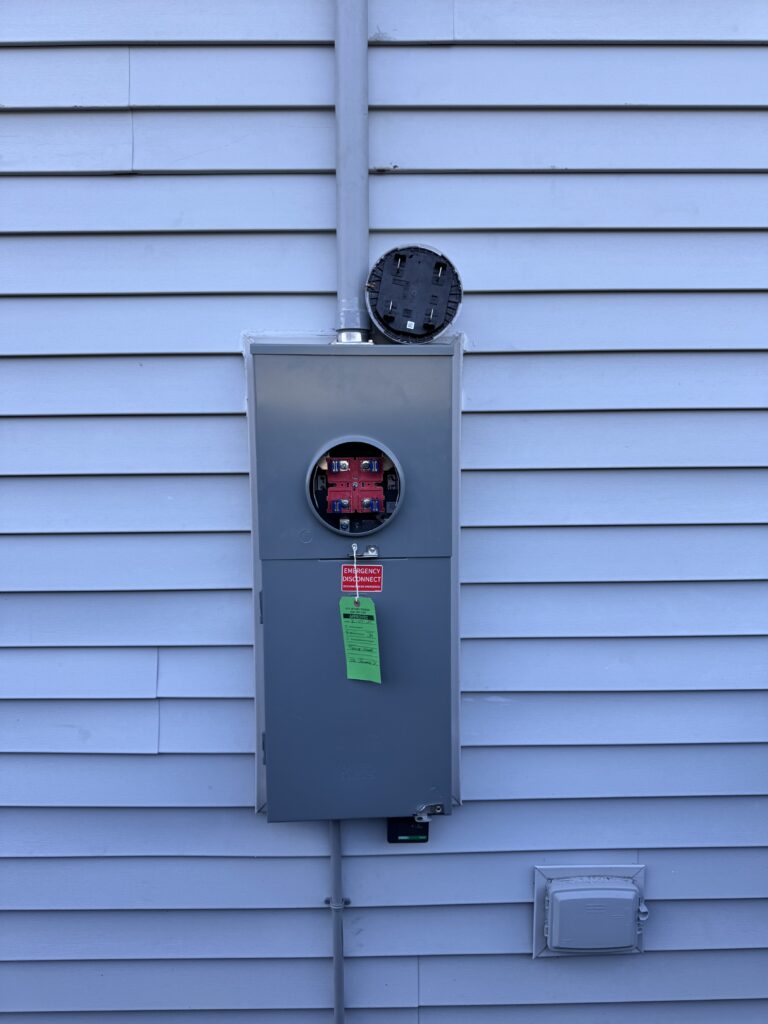
3-phase 208/120 or 480/277 service work, including service entrance, switchboards, distribution panels, and motor control. We coordinate with the utility for transformer pad and primary metering on larger services. Voltage system selection (208 vs 480) follows the load profile and the available utility service.
Sign circuits, exterior, and parking lot
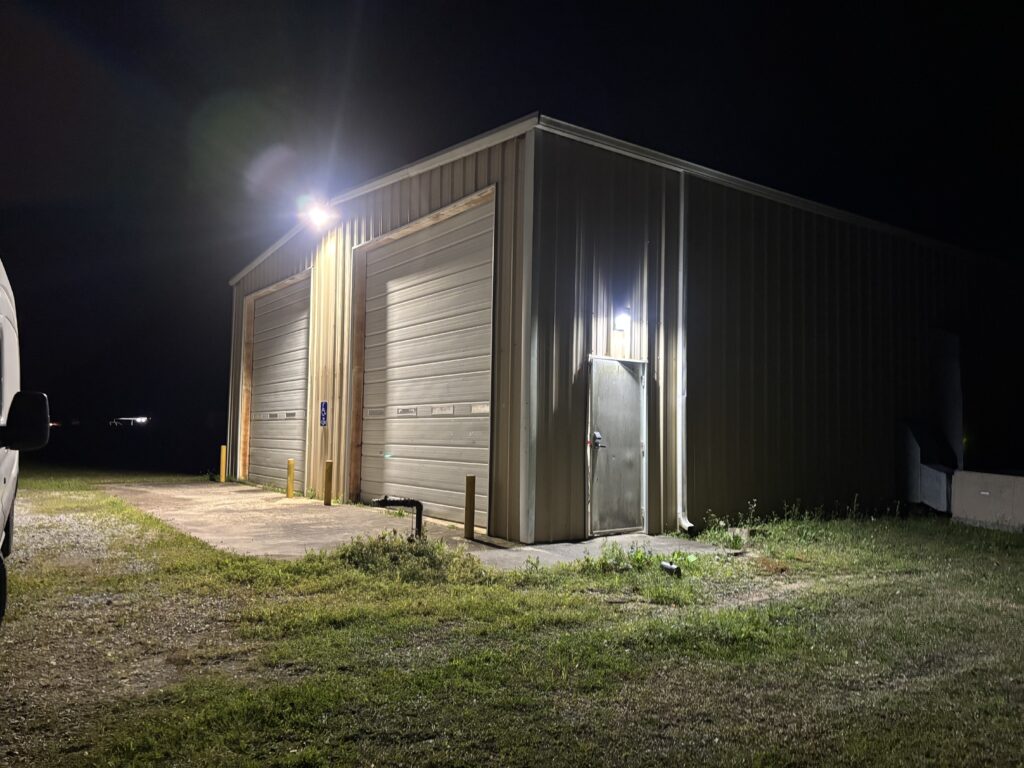
Illuminated sign circuits with the disconnect required by NEC 600.6 within sight of the sign. Exterior wall packs, building accent lighting, and dusk-to-dawn photocells. Parking lot poles with branch circuit overcurrent protection at each pole and grounding electrodes per NEC 250. Photocell control or astronomical time clock for after-hours lighting.
Code-correction and fire marshal lists
Fire marshal inspections often produce a list of code corrections: missing emergency lighting, missing exit signs, panel clearance violations per NEC 110.26 (36 inches deep, 30 inches wide, 6.5 feet high), missing labels, missing GFCI protection, and missing AFCI where required. We work from the inspector list, fix what is flagged, and call for re-inspection.
How we run commercial jobs
Pre-construction: we read the plans, take off material, write a bid that breaks out material and labor by floor or area, and identify any long-lead items (panels, gear, transfer switches). Mobilization: we set up the temporary power if needed, store material on site, and coordinate the rough-in schedule with the GC. Rough-in: we run all branch circuits, set boxes, and pull feeders before sheetrock. Trim: after paint we install devices, fixtures, and the panel trim. Close-out: we typed-panel-schedule every panel, label every junction box, and turn over the as-built drawings.
Permits, inspections, and Louisiana licensing
We pull the electrical permit in our name with the city or parish AHJ. The Louisiana State Licensing Board for Contractors (LSLBC) requires the commercial electrical license for jobs above the parish dollar threshold (commonly $10,000 statewide, verified by the AHJ). We hold the license. We also coordinate with the fire marshal on any monitored systems, sprinkler control, or shunt-trip work.