Emergency electrical service in Lake Charles
An electrical emergency is anything that puts the building or the people inside at risk before normal business hours can fix it. No power to a refrigerator full of food after a storm is urgent. A burning smell at the panel is an emergency. Sparking at a receptacle is an emergency. A tripped main that will not reset is somewhere between, depending on what we find when we open the cover.
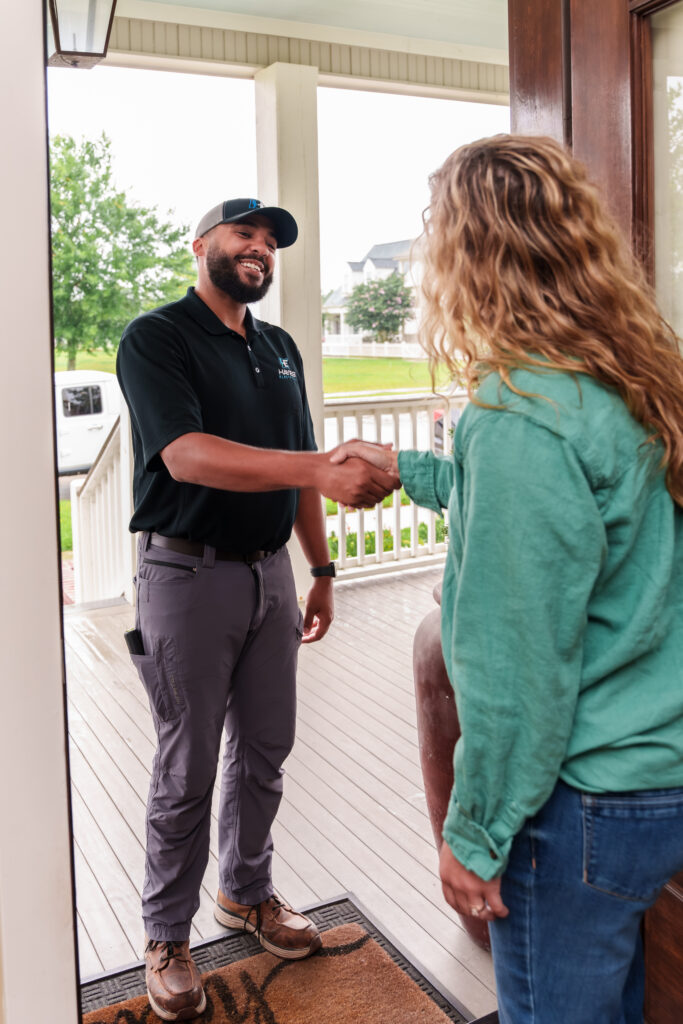
We answer the phone after hours for the calls that cannot wait. We arrive with the meters, the spare breakers, the temporary jumpers, and the panel parts we need to make the building safe, then schedule the permanent repair if the night fix is temporary.
What counts as an emergency
Call right now
- Burning smell at the panel, at a receptacle, or in a wall
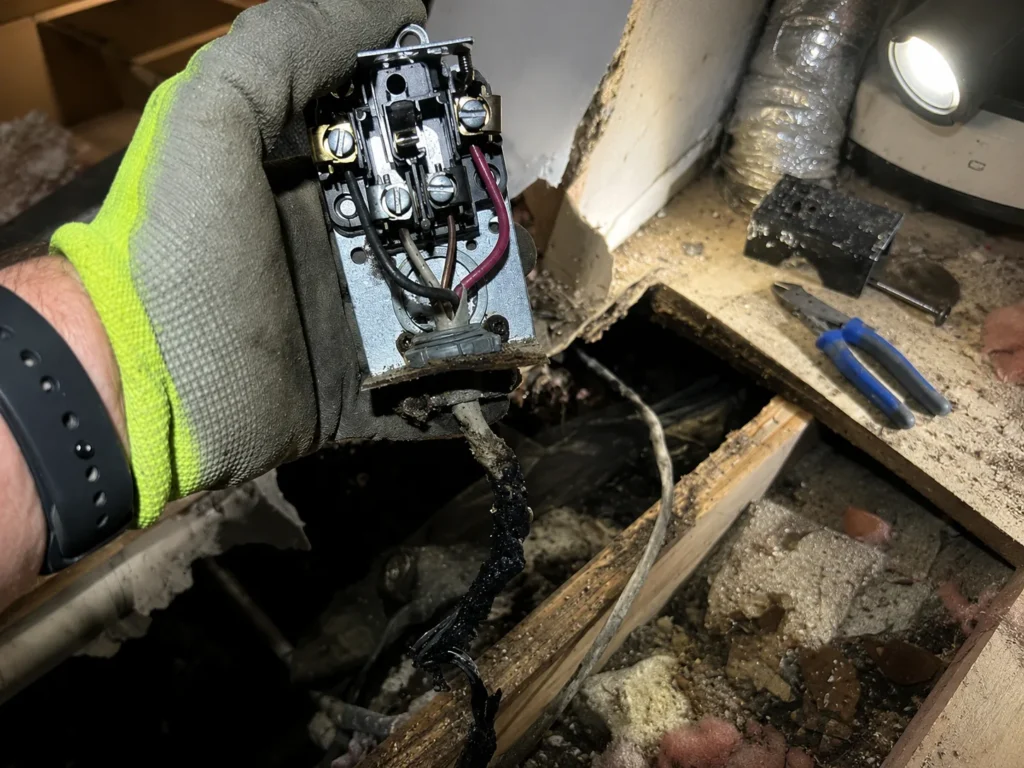
- Visible smoke, char marks, or discoloration around a breaker or outlet
- Sparking or arcing you can see or hear
- Buzzing or sizzling at the panel
- A breaker that is hot to the touch
- Wires down on or near the house (call Entergy first, then us)
- A meter base pulled away from the wall after a storm
- Water inside a panel, junction box, or fixture
Same-day, not life-safety
- No power to part of the house, refrigerator running but lights out
- Tripped main that resets but trips again within minutes
- Half the house dark after a storm (often a lost neutral, which is serious but contained)
- GFCI that will not reset and feeds bath, kitchen, or outdoor outlets
What to do before we get there
If you smell burning at the panel, kill the main breaker if you can reach it safely. If you cannot reach the main, leave the building and call. Do not touch a panel with water around it. Do not try to reset a breaker that is hot. If a wire is down outside, stay back at least 35 feet and call Entergy on their outage line first. CDC guidance on storm electrical hazards lines up with this: assume any downed wire is energized until the utility confirms otherwise.
What we do on a night call
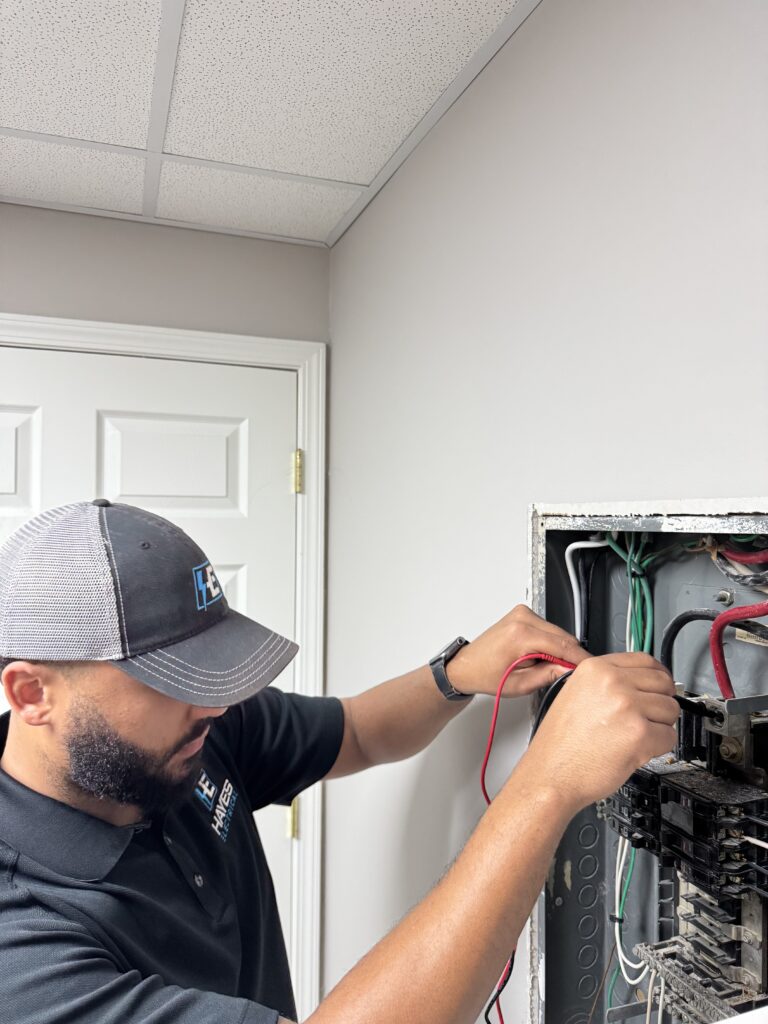
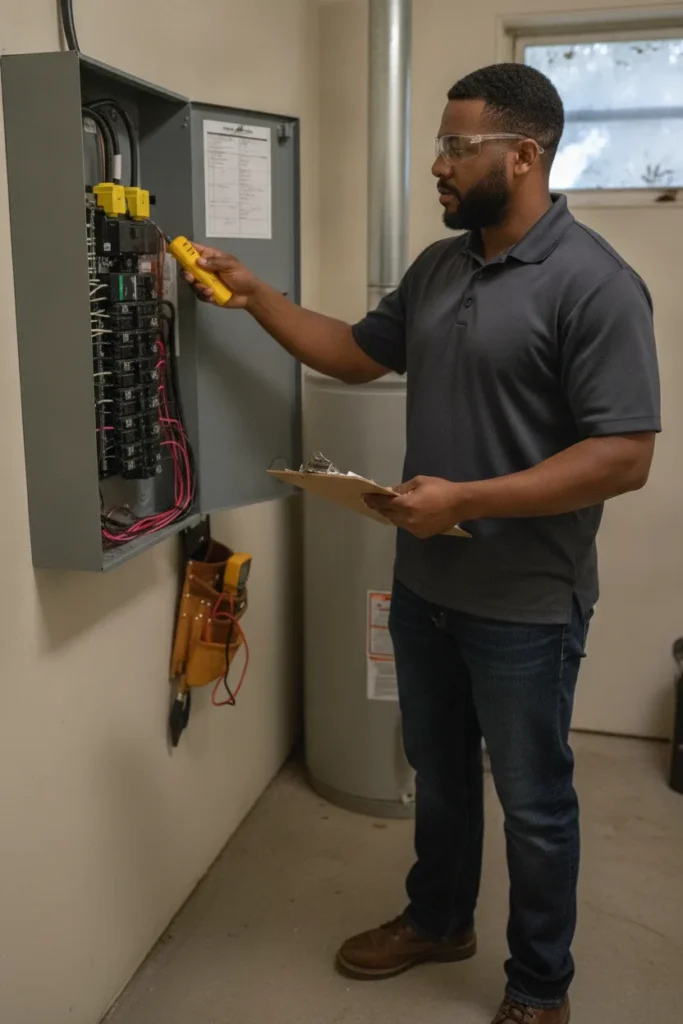
Before we touch anything we verify the problem with a meter. A “dead circuit” can be a loose neutral, a failed breaker, a burned termination at a receptacle, a backstabbed connection that finally let go, or a service problem on the utility side. The fix is different for each. We identify the failure point, isolate it, restore power to the safe parts of the building, and tell you what the permanent repair needs to look like.
After Laura, Delta, or any named storm
The two biggest patterns we see after a hurricane are damaged meter bases (the riser pulled away from the house) and surge damage to anything plugged in. Entergy will not reconnect a damaged meter base until a licensed electrician repairs it and the parish or city inspector signs off. We handle that paperwork. We also document surge damage for insurance claims and install whole-house surge protection per NEC 285 so the next storm does not take out everything in the house again.
Real failure modes we see on emergency calls
Federal Pacific Stab-Lok breakers that should have tripped on overload and did not, leading to the wire becoming the fuse. Zinsco panels with bus arcing that show up as a buzzing sound and discoloration on the cover plate. Double-tapped breakers where someone added a circuit by jamming a second wire under the same lug. Aluminum branch wiring on 1965-1973 homes with browned terminations at receptacles and switches. Backstabbed receptacles that worked for 20 years and finally gave up.
None of these are rare. All of them are fixable. The question is whether the fix needs to happen at midnight or whether we can make the area safe tonight and come back inside business hours.
What an emergency call costs
Emergency rates are higher than scheduled work because we are off the clock, the supply houses are closed, and we are pulling from truck stock. We tell you the rate before we dispatch. If the fix turns out to be small (a single bad breaker, a single failed device) the call is shorter and cheaper than a major repair. If the fix is large (a panel change, a service repair) we make the building safe tonight and schedule the rest.
Storm and outage protocol
After a named storm the volume of calls makes triage real. We prioritize active hazards (smoke, sparking, water in equipment) first, then loss of power to medical equipment or refrigerated medication, then everything else. We are honest about the timeline. If you are on the day-three list we tell you that when we book.