
GROUNDING
Ground Wire Installation in Lake Charles
Licensed Master Electrician on every install. Call (337) 570-2327 or request a quote online.
WE COVER THIS
Ground Wire Installation
Louisiana licensed · Lifetime Craftsmanship Guarantee
LA-licensed master electrician leading every job. Family-owned, owner-led out of Lake Charles.
Lifetime Craftsmanship Guarantee on every install. If our work fails because of how we put it in, we come back and fix it.
After-hours dispatch line answered by a person in Calcasieu Parish, not a phone tree. Hurricane season we run extended hours.
Straight answer
Hayes Electrical handles ground wire installation for homes and businesses across Lake Charles and Southwest Louisiana. Licensed, bonded, and backed by our Lifetime Craftsmanship Guarantee.
01
/ HOW THIS WORKS
How ground wire installation works.
Grounding electrode conductor
GEC sized per NEC 250.66 for the service rating. 6 AWG copper for 200A service, 4 AWG for 400A service, with smaller sizes for smaller services. Conductor runs from the main panel neutral-ground bonded busbar to the ground rod with no splices (per NEC 250.64(C)) or with irreversible-compression splices where length requires. Conductor protected from physical damage where exposed per NEC 250.64(B).Water pipe bonding
Water pipe bonding jumper per NEC 250.104(A) installed at the metal water pipe within 5 feet of the entrance to the building. Bonded with a conductor sized per NEC 250.104(A)(1). The bonding jumper connects the metal water pipe to the grounding electrode system. If the water pipe is plastic for the building entrance (PEX, PVC, CPVC), the bonding is not required per the code, but we still verify any metal piping inside the building is properly bonded.Gas pipe bonding
Gas pipe bonding per NEC 250.104(B) for CSST (corrugated stainless steel tubing) systems or per the applicable section for other gas piping. The bonding jumper connects the gas piping to the grounding electrode system, typically through the appliance grounding connection but with a dedicated bonding jumper where the appliance connection alone is not sufficient. Coordinated with the gas piping installer if a new gas line is being installed concurrently.Equipment grounding retrofit
Older branch circuits without equipment grounding conductors (EGC) can have ground added in two ways: pull a new EGC alongside the existing branch circuit per NEC 250.130(C), or convert the receptacles to GFCI per NEC 406.4(D)(2) with the required "No Equipment Ground" labels. The full EGC retrofit gives true equipment grounding; the GFCI conversion gives ground-fault protection without the equipment ground. Both are code-compliant; the right choice depends on the circuit length and the access for pulling new conductor.
02
/ PROCESS
Our process
01
Existing system assessment
We inspect the existing grounding (rods visible at the service, water and gas pipe bonding, GEC condition and routing) and test the existing ground impedance with a Fluke earth resistance tester or a clamp meter on the GEC.
02
Code compliance verification
Current NEC compared to the existing install. Missing rods, undersized GEC, missing water and gas bonding, and inadequate ground impedance all flagged.
03
Quote on paper
Rod count, GEC size, bonding jumper installs, EGC retrofits, and any access cuts needed for routing. Labor and parts itemized.
04
Drive rods and test
Rods driven to full depth. Impedance tested. Second rod added per NEC 250.53 if the first rod cannot meet the 25-ohm threshold.
05
Pull GEC and bond
GEC pulled from the panel to the rods with no splice where possible. Water and gas pipe bonding jumpers installed. All connections torqued per NEC 110.14 values.
06
Test and document
Full ground system tested for continuity and impedance. Written documentation with impedance readings, rod count, and the NEC sections that applied. Panel labeling updated to reflect the GEC and ground configuration.
Permits
Permits and inspections
Some jobs need a permit in Calcasieu, some do not. When the parish or city wants one, we pull it under LA Lic #73821, set the rough-in and final inspection, and stay on the job until the inspector signs off. You do not touch the paperwork.
Warranty
What's covered
Lifetime Craftsmanship Guarantee on every install. If our work fails because of how we put it in, we come back and fix it at no charge. Documented in writing at handoff and stays with the home.
Safety
Safety notes
Ground wire installation follows NEC 250.50 for the grounding electrode system, NEC 250.52 for acceptable electrode types, NEC 250.53 for ground rod requirements including the 25-ohm impedance threshold and second-rod requirement, NEC 250.64 for grounding electrode conductor installation (no splices where avoidable, irreversible compression where required, protection from physical damage), NEC 250.66 for GEC sizing per service rating, NEC 250.104 for water pipe and gas pipe bonding within 5 feet of entrance, NEC 250.118 for equipment grounding conductor types, NEC 250.130(C) for adding EGC to ungrounded circuits, NEC 406.4 for grounding-type receptacles, and NEC 406.4(D)(2) for GFCI on ungrounded circuits with required labeling. Ground impedance is measured with a Fluke earth resistance tester or a clamp meter on the GEC under load.
03
/ RECENT WORK
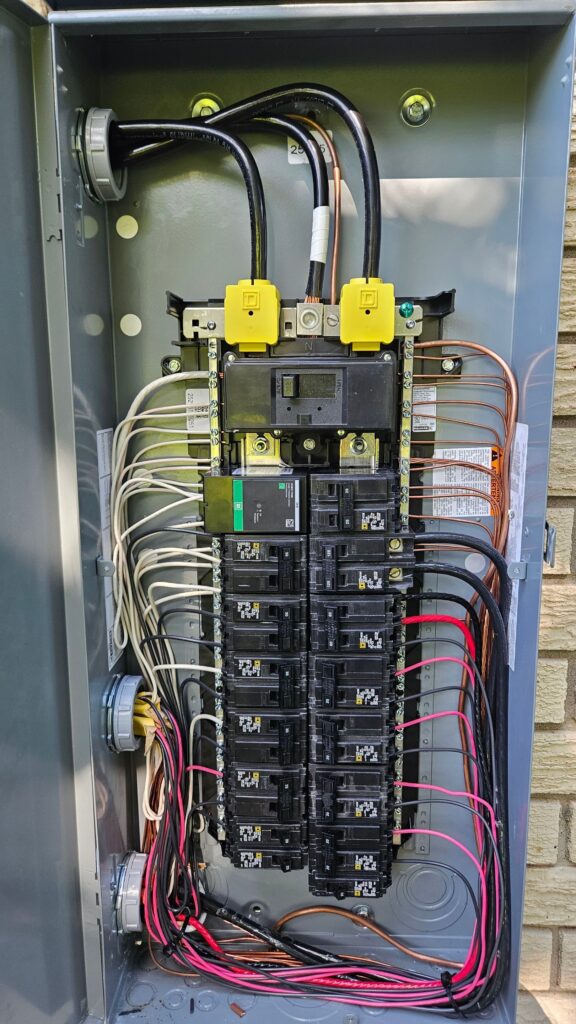
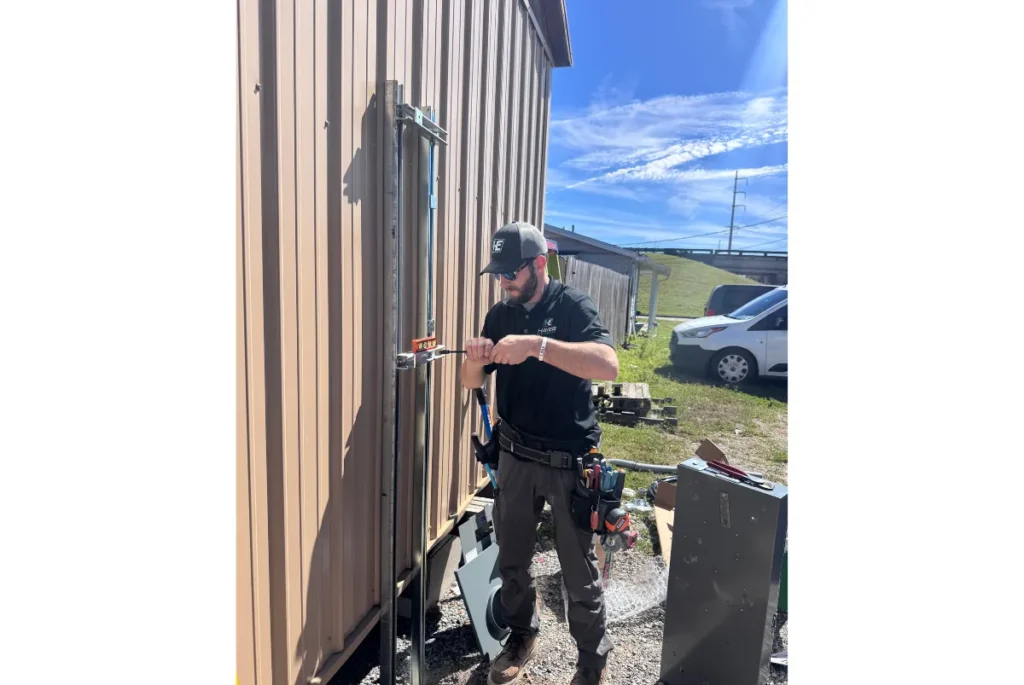
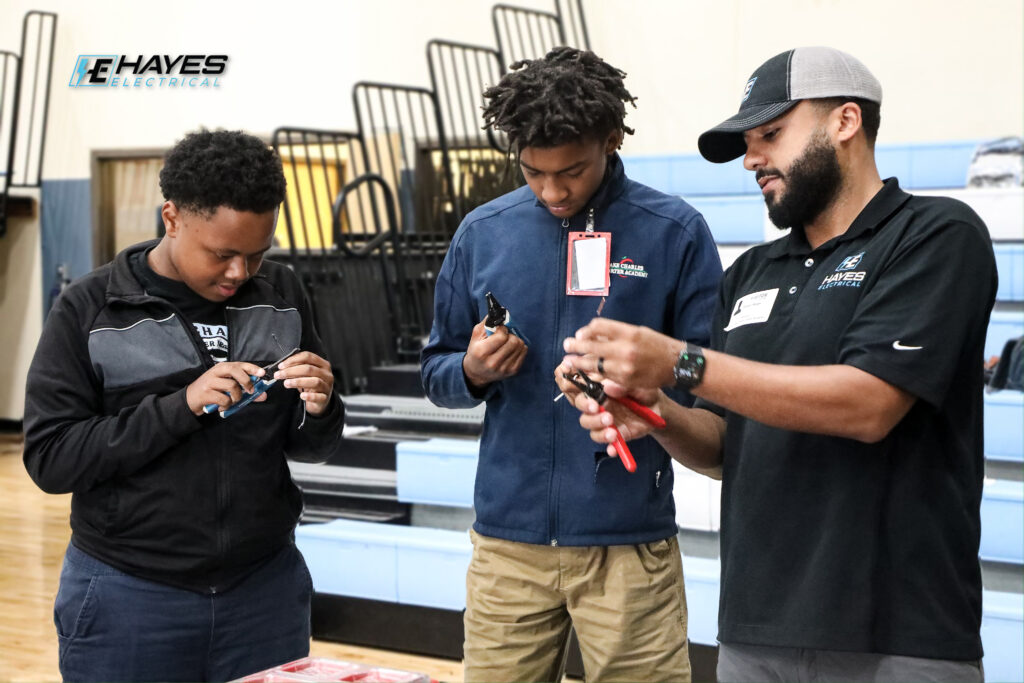
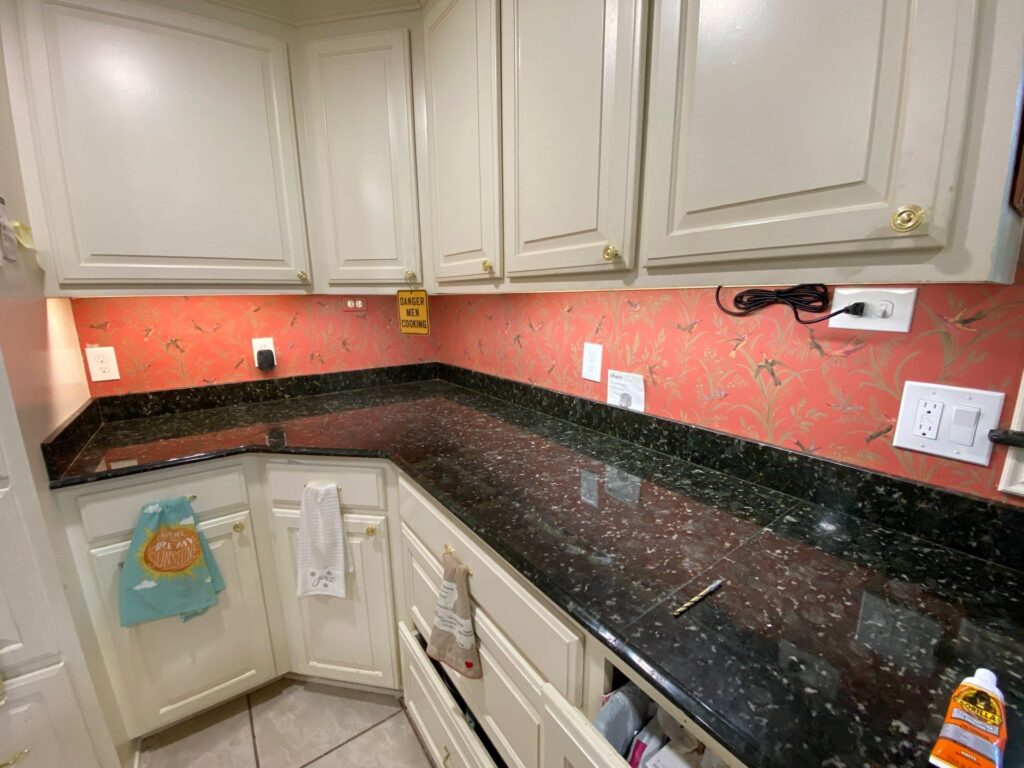
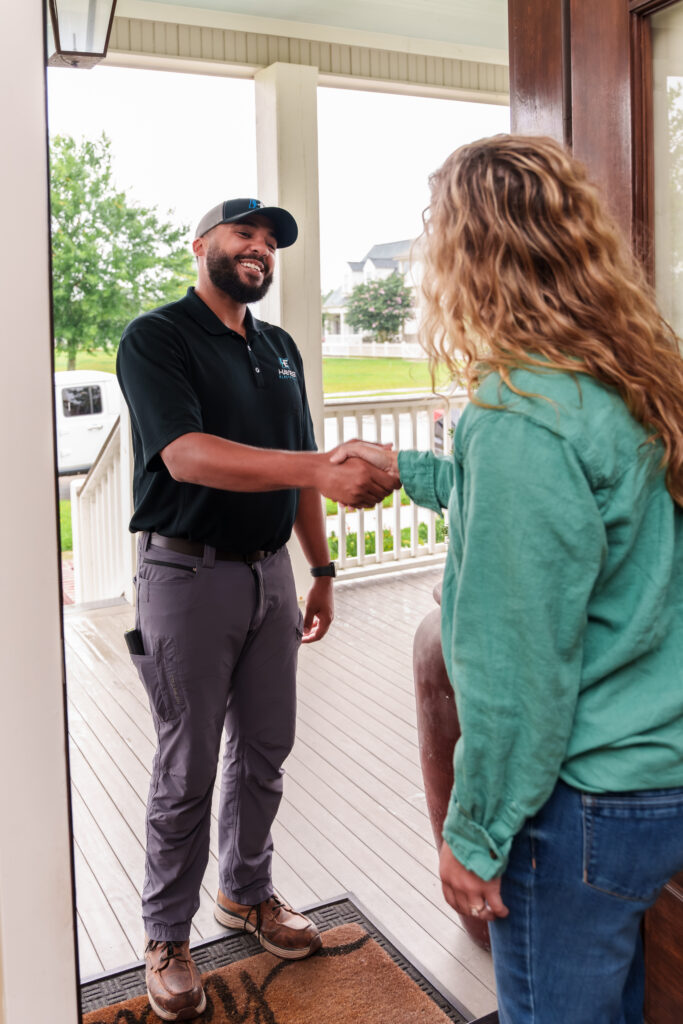
Hayes work across Southwest Louisiana.
Real jobs, real crew, real Lake Charles installs. Pulled from across our service area.

04
/ THE OWNER

Founder · Master Electrician · LA Contractor Lic #73821
Dorian Hayes
Dorian Hayes started Hayes Electrical because he believed homeowners deserved better than what most contractors give them. A licensed master electrician with seven years of experience, he and his wife Juliet built the ...
05
/ WHO TO HIRE
Why hiring a licensed electrician matters.
Here is the no-spin cut on ground wire installation. Same answer we would give a friend in Westlake or Carlyss, whether or not we end up winning the job.
Hayes Electrical
A licensed electrician
LA-licensed master electrician walks every call. Family-owned, owner-led, based in Lake Charles.
Permits pulled under LA Lic #73821 and inspections coordinated with the Calcasieu, Jeff Davis, Allen, or Cameron Parish AHJ when the work calls for it.
Lifetime Craftsmanship Guarantee in writing. If our work fails, we come back and fix it. Stays with the home.
Insured and carrying workers' comp on every truck that rolls.
Quote on paper before we cut the first wire. The signed number is the number you pay.
A handyman
Unlicensed for electrical
No LA state electrical license. Can swap a fixture, cannot legally touch a panel, a service entrance, or a rewire.
No permits. When the parish or city audits the work later, it does not pass.
No real warranty. "Call me if it breaks" falls apart the day you actually need it.
If unlicensed work starts a fire, your homeowner policy can flat-out deny the claim.
Cash discount sometimes shows up on the invoice. So does the next problem.
DIY
Doing it yourself
Cheap right up until something goes sideways. Most jobs need a load calc, NEC compliance, and a permit.
A failed inspection sends you back to redo it. Selling the house later, the buyer's inspector flags it the same way.
No warranty. The replacement is on you.
Hot wiring is no joke. Most fatal home electrical accidents in this country are DIY.
If you genuinely know what you are doing, fine. If you do not, call us first.
06
/ HOW TO TELL IT IS TIME
How to know when it is time, and what to expect.
When to call us in for ground wire installation
Most ground wire installation calls in SWLA come up while a homeowner is already planning something else: a remodel, a generator install before the next hurricane season, an EV charger in the carport, or sizing the service to handle a new addition. Walking the property early keeps the sequencing clean. Get us in before the drywall closes and you avoid a rip-out. Get us in before you sign with the GC and you avoid a scope fight. Even if the install is still six months out, a planning walk is welcome.
What we walk on the first visit
We pull the panel cover, check the age and brand (Federal Pacific Stab-Lok and Zinsco still show up around Lake Charles often enough), look at breaker space and conduit access, and crawl the attic or pier space if the run goes that way. For anything that touches the service drop we coordinate the cut with Entergy or Cleco from day one. The number we hand you is fixed for the scope we walked. Change orders only show up if we find something new in the wall, and you hear about it before we keep going.
What ground wire installation in Lake Charles covers
Ground wire work covers several specific scopes: driving new ground rods at the service, sizing and pulling the grounding electrode conductor (GEC) from the panel to the ground rods, bonding water pipes and gas pipes per NEC 250.104, and adding equipment grounding conductors where missing on older branch circuits. Each scope has specific NEC requirements that matter for inspection pass and for actual electrical safety.
Hayes Electrical handles ground work as part of panel upgrades, service restorations, code compliance corrections, and standalone grounding upgrades. The work is straightforward, but the testing matters: NEC 250.53 sets a 25-ohm impedance threshold for ground rods, and a single rod that cannot meet the threshold requires a second rod.
What gets installed
Ground rods (typically 5/8 inch by 8 foot copper-bonded steel) driven into the earth at the service location. Grounding electrode conductor (GEC) sized per NEC 250.66 (6 AWG for 200A service, 4 AWG for 400A service) running from the panel to the ground rod system. Water pipe bonding (NEC 250.104(A)) within 5 feet of the water pipe entrance. Gas pipe bonding (NEC 250.104(B)) at the appliance side. Equipment grounding conductors (EGC) on branch circuits where the original install lacked ground.
NEC and code points
NEC 250.50 grounding electrode system (the collection of grounding electrodes). NEC 250.52 acceptable electrode types. NEC 250.53 ground rod requirements (including 25-ohm impedance threshold). NEC 250.66 GEC sizing. NEC 250.104 water pipe and gas pipe bonding. NEC 250.118 equipment grounding conductor types. NEC 406.4 grounding-type receptacles. NEC 406.4(D)(2) GFCI on ungrounded circuits with required labeling.
Lake Charles specifics
Soil conditions in Calcasieu Parish vary. Sandy soil near the coast has lower conductivity and ground rods often need a second rod or supplemental electrode to meet the 25-ohm NEC 250.53 threshold. Clay soil further inland has better conductivity. Storm damage from prior hurricane seasons sometimes destroyed original ground rods or pulled them out of the earth, and restoration work includes new rods.
Why grounding matters
The ground system gives fault current a path back to the source so the overcurrent protection (breaker) can sense and clear the fault. Without a low-impedance ground path, faults persist and the breaker may not trip. The ground also limits the voltage difference between the equipment and earth, which protects against shock. Both functions matter for safety and both depend on the ground installation being done correctly.
When grounding upgrades are needed
During panel upgrades (the new service usually warrants new ground rods and GEC sizing). During storm restoration when original ground rods are damaged or missing. During code compliance corrections where the original ground does not meet NEC 250.53 impedance. On older homes with ungrounded branch circuits to add equipment grounding paths. On any service amperage increase where the existing GEC is undersized for the new service.
Why ground rod testing matters
The 25-ohm threshold in NEC 250.53 is not arbitrary. A ground system with high impedance cannot reliably carry fault current back to the source, which means the breaker may not see enough current to trip on a real fault. Untripped faults persist as continuing hazards. Field testing with a Fluke earth resistance tester or a clamp meter on the GEC tells us whether the system actually meets the threshold or whether a second rod is needed.
Why bonding matters separately from grounding
Grounding connects the system to earth. Bonding connects metal parts to each other and to the grounding system. Bonding prevents voltage differences between metal parts during a fault, which is what prevents shocks when someone touches two grounded metal surfaces during a fault condition. NEC 250.104 specifies water pipe and gas pipe bonding because those metal pipes can become energized if not bonded to the grounding system.
Lake Charles soil and ground rod performance
Sandy soil near the coast has lower conductivity than clay soil inland. Most Lake Charles ground rod installs end up with two rods because the single-rod 25-ohm threshold is hard to meet in sandy soil. Some installs in particularly dry sandy locations require additional supplemental electrodes (chemical rods, foundation steel bonding, ground ring) to reach the threshold.
Coordination with the rest of the service
Ground work is often part of a larger scope: panel upgrade, service restoration, code compliance correction, or SPD install. The ground integrity is a foundation for those scopes; SPDs in particular depend on low-impedance ground for surge diversion. We verify the ground meets the threshold before completing any dependent work.
Documentation
Written documentation includes the impedance readings, the rod count, the GEC size, the bonding scope, and the NEC sections that applied. Documentation supports any inspection or insurance discussion.
07
/ GOOGLE REVIEWS
What Southwest Louisiana says about our work
Real reviews from real customers across Lake Charles, Sulphur, Moss Bluff, and the surrounding parishes.
★★★★★
⭐️⭐️⭐️⭐️⭐️ Had Hayes Electric install an EV wall charger for my new electric vehicle and couldn't be happier. The whole process was clean, fast, and professional. Communication was excellent every step of the way, which really gave me peace of mind. Special thanks to Mackenzie McGuane for the outstanding work - everything was done right the first time and looks great. Highly recommend Hayes Electric if you're looking for quality and reliability!
★★★★★
Hayes Electrical is the most professional and friendly electrical service in the Lake Charles area! After we were having issues with our Generac and wanted to be prepared for the hurricane season, Hayes Electrical was quick to diagnose and repair the issue! Mr. Dorian was very polite and knowledgeable! When he came out to make the repair he kept us in the loop about exactly what he was doing and made sure we understood how to operate the Generac! Would definitely recommend Hayes Electrical to everyone!
★★★★★
Electrical wiring installation
Mackenzie and Hayden completed my job effectively and efficiently. They are very professional, polite and well mannered. Both were able to check on making sure the job was done correctly, while also making sure other things were working properly as well. I highly recommend this company and workers. Thanks Darius Clayton for your recommendation.
★★★★★
We turned to the company for help to find out the reason why our generator stopped working, fix the problem and start it. We were served by Dorian, a very nice young man, a good specialist and a professional in his field. Everything went well, Dorian did diagnostics, invited a mechanic and our generator works. We recommend this company if you have problems with the generator.
Common questions about ground wire installation
How many ground rods do I need?
NEC 250.53 requires a single rod if the single rod meets the 25-ohm impedance threshold. If a single rod cannot meet 25 ohms (common in sandy coastal soil), NEC 250.53 requires a second rod, spaced at least 6 feet from the first and bonded in parallel. Most Lake Charles installs end up with two rods because of soil conditions.
How much does a ground rod install cost?
A single new rod with GEC connection runs $300 to $500. A two-rod install runs $500 to $800. Adding water and gas pipe bonding adds $200 to $400 depending on access. Full ground system upgrade as part of a service amperage upgrade is folded into the larger scope.
Does my old house need a ground upgrade?
It depends on the existing install. Pre-1962 homes often have no equipment grounding on branch circuits, and the right path is GFCI conversion per NEC 406.4(D)(2). Service grounding is usually present but may be undersized or missing the modern bonding requirements. We assess and tell you on the inspection visit.
What happens if my ground rod cannot meet 25 ohms?
NEC 250.53 requires a second rod, spaced at least 6 feet from the first rod and bonded in parallel. Two rods in parallel cut the impedance roughly in half, which usually gets the system below the 25-ohm threshold. In rare cases with very poor soil conductivity, additional supplemental electrodes (chemical rods, foundation steel, ground ring) are needed.
Do I need to bond my plastic water pipe?
No. NEC 250.104 bonding requirements apply to metal water pipe. If your service entrance is PEX, PVC, or CPVC for at least 10 feet of pipe before entering the building, the metal water pipe bonding requirement does not apply at the service. Any metal piping inside the building still needs verification that it cannot become energized inadvertently.
Can I drive my own ground rods?
The physical rod-driving is straightforward (a 5/8 inch by 8 foot copper-bonded rod driven with a sledge or a hammer drill ground rod driver). The NEC compliance is the part that requires care: rod spacing, GEC sizing, GEC routing, impedance testing, and bonding integration with the existing ground system. Calcasieu Parish AHJ inspects the work on permitted scope.
08
/ OTHER SURGE PROTECTION AND GROUNDING SERVICES
Other surge protection and grounding work we handle out of Lake Charles.
Surge Protection Installation
Hayes Electrical handles surge protection installation for homes and businesses across Lake Charles and...
Where we run ground wire installation across SWLA.
Pick the city closest to your address. Same Lake Charles crew, same Lifetime Craftsmanship Guarantee.
Belle Savanne ground wire installation
Ground Wire Installation for Calcasieu River homes
Ground Wire Installation in Carlyss
Ground Wire Installation in Charpentier Historic District
Chennault ground wire installation
Ground Wire Installation in Dequincy
Ground Wire Installation for Goosport homes
Grand Lake ground wire installation
Iowa ground wire installation
Ground Wire Installation for Jennings homes
Ground Wire Installation for Kinder homes
Ground Wire Installation for Lake Arthur homes
Run ground wire installation in Lake Charles
Lockmoor ground wire installation
Ground Wire Installation for Mallard Junction homes
Ground Wire Installation in Margaret Place Historic District
Moss Bluff ground wire installation
Mossville ground wire installation
Prien ground wire installation
Prien Lake ground wire installation
Ground Wire Installation for Sulphur homes
Vinton ground wire installation
Walnut Grove ground wire installation
Ground Wire Installation in Welsh
Run ground wire installation in Westlake
09
/ REQUEST
Ground system needs work? Call.
New rods, GEC upgrade, water and gas pipe bonding, or equipment grounding retrofit on older branch circuits. NEC 250.53 impedance testing on every install.
Or call us direct
(337) 570-2327