
DETECTOR WIRING
Smoke and CO Detector Wiring in Lake Charles
Licensed Master Electrician on every install. Call (337) 570-2327 or request a quote online.
WE COVER THIS
Smoke and CO Detector Wiring
Louisiana licensed · Lifetime Craftsmanship Guarantee
LA-licensed master electrician leading every job. Family-owned, owner-led out of Lake Charles.
Lifetime Craftsmanship Guarantee on every install. If our work fails because of how we put it in, we come back and fix it.
After-hours dispatch line answered by a person in Calcasieu Parish, not a phone tree. Hurricane season we run extended hours.
Straight answer
Hayes Electrical handles smoke and co detector wiring for homes and businesses across Lake Charles and Southwest Louisiana. Licensed, bonded, and backed by our Lifetime Craftsmanship Guarantee.
01
/ HOW THIS WORKS
How smoke and co detector wiring works.
Cable pull and interconnect
3-conductor 14 AWG NM cable pulled from the source breaker through each detector location, with the interconnect signal looped through every detector. Cable supported per NEC 334.30 (within 12 inches of every box, at intervals not exceeding 4.5 feet). Detector boxes installed at ceiling locations, typically 4 inches from any wall and not in dead-air spaces. Pulling through attic on most single-story installs is straightforward; two-story or finished-attic homes require more access work.Detector installation
Detectors installed per the manufacturer instructions per NEC 110.3(B). Combination ionization-photoelectric models for whole-home coverage. Combination smoke and CO models in locations with combustion appliances or attached garages. Battery backup on every detector (hardwired detectors have integrated battery backup so they continue to function during a power outage). Detector test buttons verified at install.Wireless interconnect retrofit option
For homes where cable pulling is impractical, wireless-interconnect detectors are a viable alternative. Each detector is hardwired for primary power (avoiding battery-only operation) and uses a wireless signal to alert the other detectors. The install is faster (no interconnect cable to pull) but the wireless link requires periodic battery replacement and the system has fewer parts shared across the loop.System test and demonstration
After install, we test every detector with smoke aerosol or the test button, verify the interconnect (when one detector alarms, every other detector alarms within 10 seconds), and demonstrate the homeowner how to test and reset. Annual testing is the homeowner maintenance. Battery replacement on the backup batteries every 5 to 10 years depending on the detector type (modern detectors have 10-year sealed batteries; older detectors require annual battery changes).
02
/ PROCESS
Our process
01
Code review
We review NFPA 72 requirements and any local Calcasieu Parish additions, plus your homeowner preferences (combination smoke/CO, smart-home integration).
02
Walkthrough and detector plan
On-site walk to identify each required detector location. Plan documented on paper before any cable is pulled.
03
Quote on paper
Detector count and type, cable runs, source breaker (often an existing bedroom or hallway circuit, or a new dedicated circuit if the homeowner wants one), and labor.
04
Cable pull and rough-in
Cable routed from the source breaker through each detector location with the interconnect signal looped. Detector boxes installed at the planned ceiling locations.
05
Detector install and test
Detectors installed and connected. Each detector tested individually. Interconnect tested by triggering one detector and verifying all others alarm.
06
Homeowner walkthrough
We show you each detector location, how to test, how to silence false alarms, and the recommended maintenance schedule. Written invoice with the detector models and the install locations.
Permits
Permits and inspections
Some jobs need a permit in Calcasieu, some do not. When the parish or city wants one, we pull it under LA Lic #73821, set the rough-in and final inspection, and stay on the job until the inspector signs off. You do not touch the paperwork.
Warranty
What's covered
Lifetime Craftsmanship Guarantee on every install. If our work fails because of how we put it in, we come back and fix it at no charge. Documented in writing at handoff and stays with the home.
Safety
Safety notes
Smoke detector wiring follows NEC 760 for fire alarm circuit installation, NEC 314 for boxes, NEC 334.30 for cable support, NEC 110.3(B) for install per manufacturer instructions, NEC 210.12 for AFCI on the supply circuit if it serves a dwelling unit branch circuit, and NFPA 72 for system requirements (detector locations, interconnect, battery backup, testing). Detectors are combination ionization-photoelectric for whole-home installs to catch both fast-flaming and slow-smoldering fires. Combination smoke-and-CO detectors are installed in homes with combustion appliances or attached garages. Battery backup on every hardwired detector ensures operation during power outages.
03
/ RECENT WORK
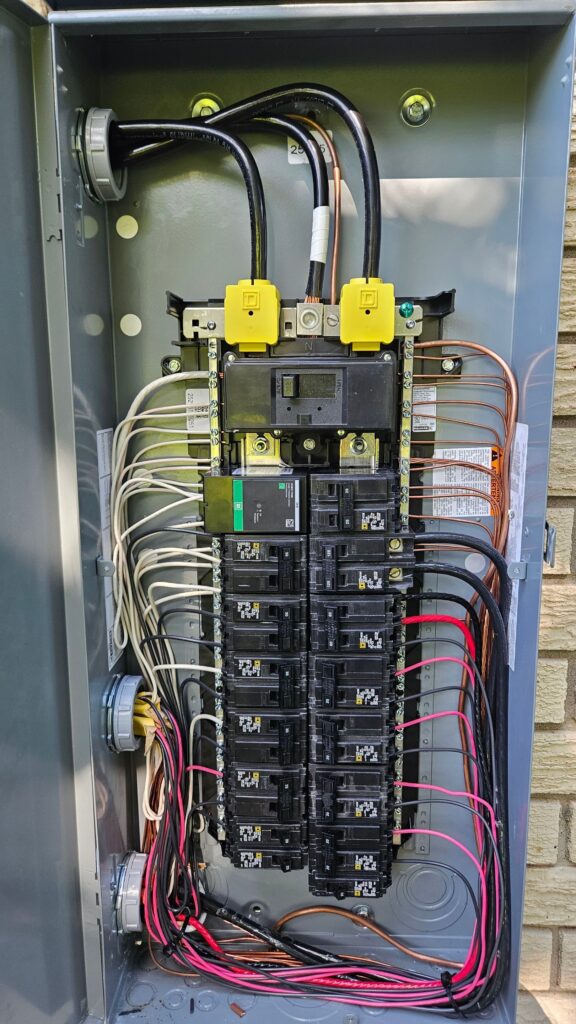
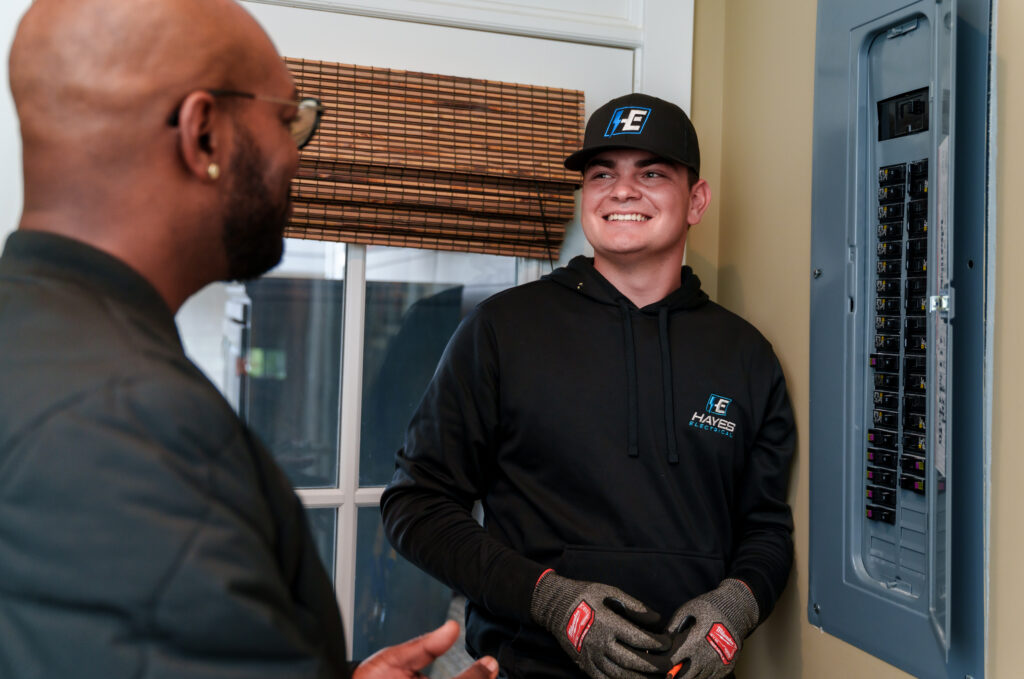
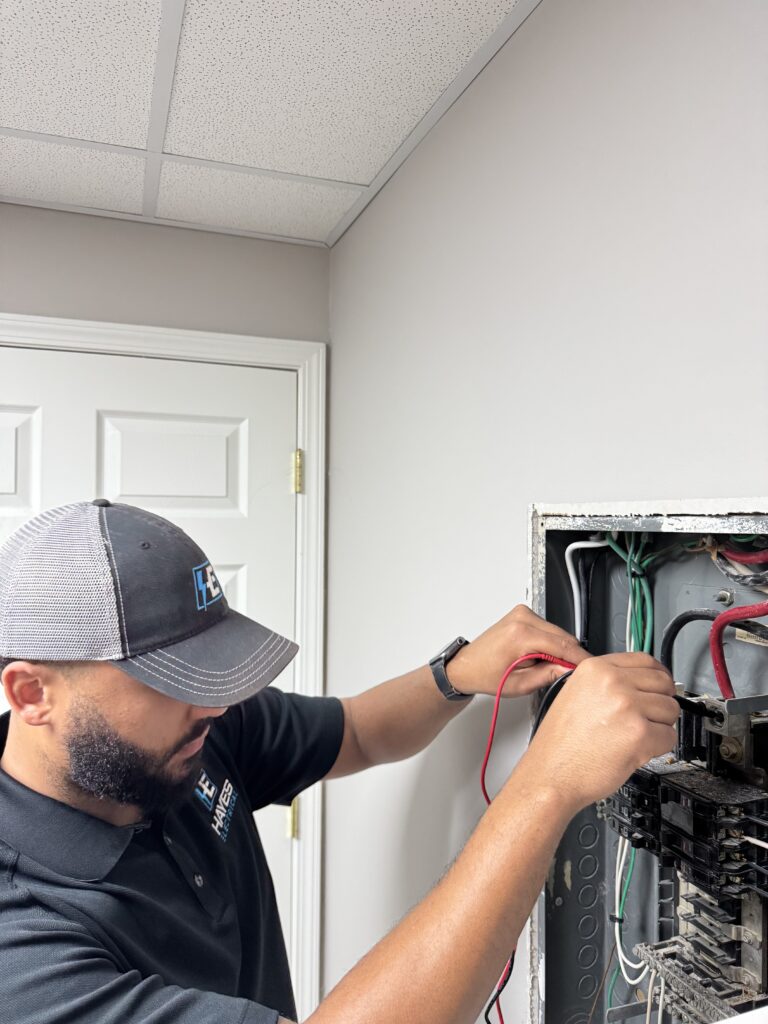
Hayes work across Southwest Louisiana.
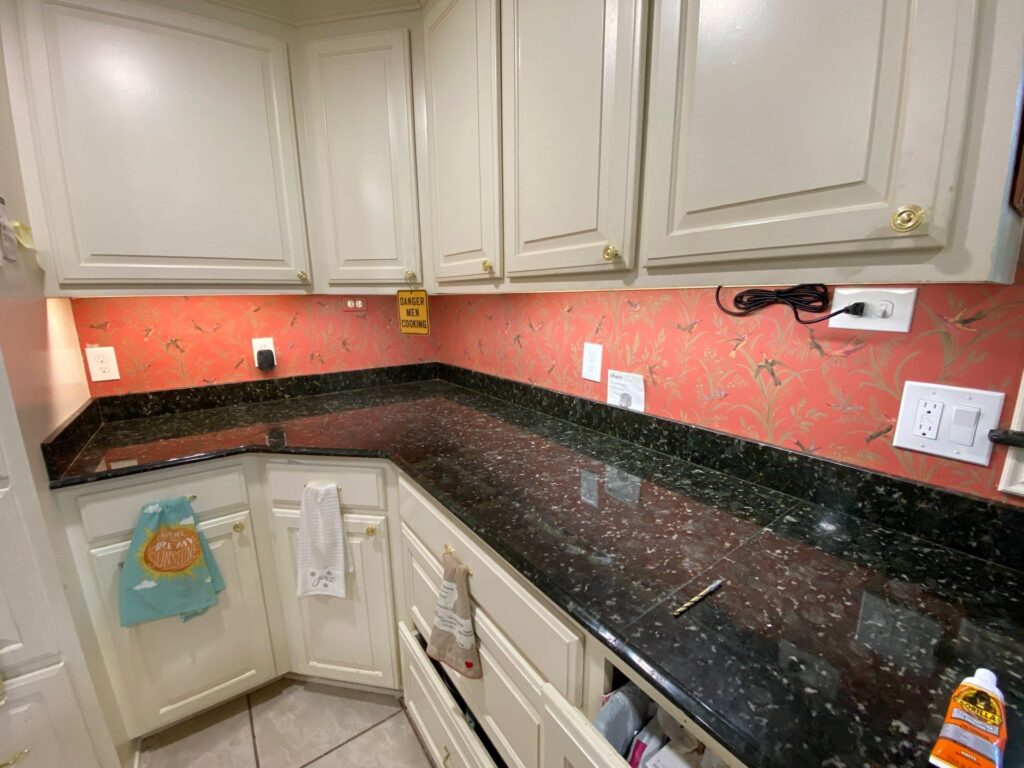
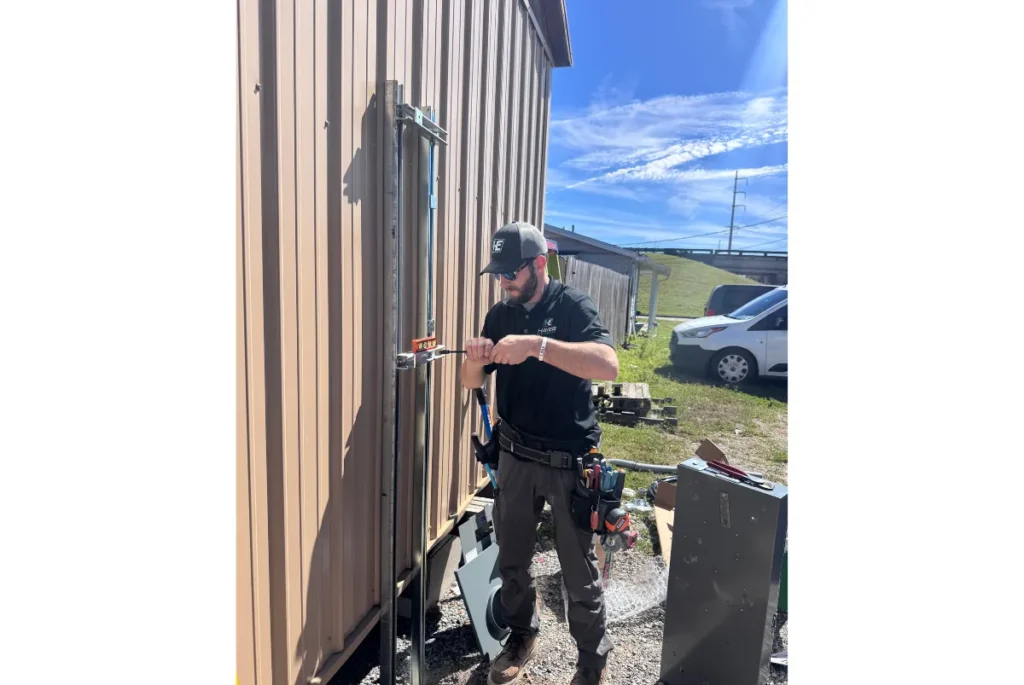
Real jobs, real crew, real Lake Charles installs. Pulled from across our service area.
04
/ THE OWNER

Founder · Master Electrician · LA Contractor Lic #73821
Dorian Hayes
Dorian Hayes started Hayes Electrical because he believed homeowners deserved better than what most contractors give them. A licensed master electrician with seven years of experience, he and his wife Juliet built the ...
05
/ WHO TO HIRE
Why hiring a licensed electrician matters.
Here is the no-spin cut on smoke and co detector wiring. Same answer we would give a friend in Westlake or Carlyss, whether or not we end up winning the job.
Hayes Electrical
A licensed electrician
LA-licensed master electrician walks every call. Family-owned, owner-led, based in Lake Charles.
Permits pulled under LA Lic #73821 and inspections coordinated with the Calcasieu, Jeff Davis, Allen, or Cameron Parish AHJ when the work calls for it.
Lifetime Craftsmanship Guarantee in writing. If our work fails, we come back and fix it. Stays with the home.
Insured and carrying workers' comp on every truck that rolls.
Quote on paper before we cut the first wire. The signed number is the number you pay.
A handyman
Unlicensed for electrical
No LA state electrical license. Can swap a fixture, cannot legally touch a panel, a service entrance, or a rewire.
No permits. When the parish or city audits the work later, it does not pass.
No real warranty. "Call me if it breaks" falls apart the day you actually need it.
If unlicensed work starts a fire, your homeowner policy can flat-out deny the claim.
Cash discount sometimes shows up on the invoice. So does the next problem.
DIY
Doing it yourself
Cheap right up until something goes sideways. Most jobs need a load calc, NEC compliance, and a permit.
A failed inspection sends you back to redo it. Selling the house later, the buyer's inspector flags it the same way.
No warranty. The replacement is on you.
Hot wiring is no joke. Most fatal home electrical accidents in this country are DIY.
If you genuinely know what you are doing, fine. If you do not, call us first.
06
/ HOW TO TELL IT IS TIME
How to know when it is time, and what to expect.
When to call us in for smoke and co detector wiring
Most smoke and co detector wiring calls in SWLA come up while a homeowner is already planning something else: a remodel, a generator install before the next hurricane season, an EV charger in the carport, or sizing the service to handle a new addition. Walking the property early keeps the sequencing clean. Get us in before the drywall closes and you avoid a rip-out. Get us in before you sign with the GC and you avoid a scope fight. Even if the install is still six months out, a planning walk is welcome.
What we walk on the first visit
We pull the panel cover, check the age and brand (Federal Pacific Stab-Lok and Zinsco still show up around Lake Charles often enough), look at breaker space and conduit access, and crawl the attic or pier space if the run goes that way. For anything that touches the service drop we coordinate the cut with Entergy or Cleco from day one. The number we hand you is fixed for the scope we walked. Change orders only show up if we find something new in the wall, and you hear about it before we keep going.
What smoke detector wiring in Lake Charles covers
Smoke detector wiring covers the installation of hardwired smoke detectors with interconnect capability, where every detector in the house signals every other detector when any one of them senses smoke. NFPA 72 (the National Fire Alarm and Signaling Code) and most state and local codes require hardwired interconnected detectors in new construction and in homes undergoing significant remodel. NEC 760 covers fire alarm circuit installation.
Hayes Electrical installs hardwired smoke and combination smoke-and-carbon-monoxide detectors during new construction, remodels, and as standalone code-compliance upgrades. The work includes pulling the interconnect cable from detector to detector, installing the detectors at the code-required locations, and integrating with the home electrical system.
Detector placement requirements
NFPA 72 requires smoke detectors in every sleeping room, outside each separate sleeping area (typically in the hallway near bedrooms), and on every level of the home (including basements). Some jurisdictions add requirements for additional locations or specific detector types. Combination smoke and carbon monoxide detectors are required in many jurisdictions for homes with combustion appliances or attached garages.
Interconnect wiring
Hardwired interconnect detectors use a 3-conductor cable (hot, neutral, interconnect signal) typically running 14 AWG NM cable from detector to detector. The interconnect signal carries the alarm condition from one detector to all others wired on the same interconnect loop. Modern detectors also offer wireless interconnect using radio signals, which avoids pulling new cable in retrofit installations but requires battery replacement and periodic testing of the wireless link.
NEC and code points
NEC 760 covers fire alarm circuits including residential smoke detector circuits. NEC 314 covers boxes used for the detectors. NEC 110.3(B) requires installation per the detector manufacturer instructions. NFPA 72 covers the system requirements (locations, interconnect, testing). NEC 210.12 AFCI typically applies to the circuit feeding the smoke detectors because they are usually on a general-purpose bedroom or hallway circuit.
Lake Charles specifics
Calcasieu Parish housing built before the mid-1990s often has battery-only smoke detectors rather than hardwired interconnected ones. Insurance carriers and real estate transactions increasingly flag this as an upgrade target. A whole-home upgrade to hardwired interconnected detectors is a one to two day install depending on the access for cable pulling and the number of detectors required.
Detector types
Ionization detectors respond fastest to fast-flaming fires (paper, wood). Photoelectric detectors respond fastest to slow-smoldering fires (upholstery, mattresses). Combination detectors include both sensors. We recommend combination ionization-photoelectric detectors for whole-home installs because the two technologies catch different fire types. Combination smoke-and-carbon-monoxide detectors add CO sensing for combustion appliance and attached garage detection.
Wired versus wireless interconnect comparison
Hardwired interconnect (3-conductor cable from detector to detector) is the historical standard and the most reliable. Wireless interconnect (radio signal between detectors) is the modern retrofit option for homes where cable pulling is impractical. Both meet NFPA 72 interconnect requirements. Wireless requires more attention to the wireless link health (periodic testing, battery checks on the wireless radio).
10-year sealed-battery detectors
Modern hardwired detectors include a sealed lithium battery rated for 10 years of backup operation. The detector and the battery reach end-of-life together; replacement is the whole unit at the 10-year mark. Older detectors with replaceable 9V batteries require annual battery replacement, which homeowners often miss. The 10-year sealed units are the modern install standard.
CO detection requirements
Carbon monoxide detection is required in many jurisdictions for homes with combustion appliances or attached garages. Combination smoke and CO detectors handle both detection types in one device. The CO sensing element has a service life of 7 to 10 years independent of the smoke sensing element, which is one reason whole-detector replacement at the 10-year mark is the standard practice.
Smart-home integration
Some hardwired detectors include Wi-Fi or Z-Wave integration with smart-home hubs. Alarm notifications go to your phone and to other smart-home devices. The integration is optional and layered on top of the standard hardwired interconnect. Common products include Nest Protect, First Alert OneLink, and Kidde Network. We install whichever ecosystem the homeowner specifies.
Permit considerations
Smoke detector wiring installation typically requires a Calcasieu Parish AHJ permit when it is part of a remodel or new construction. Whole-home retrofit on an existing home sometimes requires a permit depending on the scope; we check with the AHJ on borderline cases.
Warranty on the install
Standard install warranty is one year on labor. Detector manufacturer warranties typically run the 10-year sealed-battery lifespan, with replacement at end of life as the standard service interval.
07
/ GOOGLE REVIEWS
What Southwest Louisiana says about our work
Real reviews from real customers across Lake Charles, Sulphur, Moss Bluff, and the surrounding parishes.
★★★★★
Great service! Brent was able to diagnose the problem and complete the repair quickly and efficiently! He was able to solve a problem that my contractor's electricians were unable to solve! He was very courteous and professional. Highly recommend Hayes Electrical!! Great experience from first call to the end!
★★★★★
Hayes Electrical has earned my business in the future. They saved me hundreds of dollars by referring me to Entergy first after hearing what my electrical issues were. They could have made easy money on a service call, and then refer me to Entergy. Instead, they did the right thing and had me contact Entergy first. 5 stars Nice to see a company that didn't take advantage of a customer. ❤️1
★★★★★
Found Hayes Electrical LLC on Angi's List last September to install a home generator. From the initial phone call and every phone call in between these folks are the best. They handled everything. So kind, helpful and just awesome people. Their workers are very professional, knows their job, all wore work uniforms. We may have had a hiccup once (not their fault) didn't matter they were on top of it thru the entire install. It literally was the easiest install of anything in my house ever!! If I ever need anything I will call Hayes Electrical and no one else. I can't say enough good about these folks. And they are easy to get attached to... their good people🙏 I have to thank Dorian and McKenzie you guys are great!!
★★★★★
Electrical inspections, Electrical wiring installation, Light fixture installation, Electrical panel replacement or upgrading, Electrical outlet & switch repair, Outdoor lighting installation
The entire experience was fantastic. Dorian and Juliet were very friendly and professional to deal with. The employees who worked at our home the whole time, Mackenzie and Bailey, were knowledgeable, courteous and friendly. All our questions and concerns were addressed. We are very pleased with the service and glad we called Hayes Electrical!
Common questions about smoke and co detector wiring
How much does smoke detector wiring cost?
A whole-home retrofit to hardwired interconnected detectors in a single-family home typically runs $800 to $2,000 depending on home size, detector count (typically 6 to 12), and access for cable pulling. New construction installs are dramatically less because the cable pulls happen during the rough-in phase with walls open.
Do I have to replace my battery-only detectors?
For new construction and major remodels, hardwired interconnected detectors are typically required by code. For existing homes with battery-only detectors, no code retroactively forces replacement, but insurance carriers and real estate transactions increasingly require the upgrade. The fire-safety benefit of interconnect (one alarm sounds them all) is the safety reason regardless.
How many detectors does my house need?
NFPA 72 requires detectors in every sleeping room, outside each separate sleeping area, and on every level. A 3-bedroom single-story home typically needs 6 detectors. A 3-bedroom two-story home typically needs 8. A 4-bedroom two-story home with a basement typically needs 10 to 12.
What is the difference between ionization and photoelectric detectors?
Ionization detectors respond fastest to fast-flaming fires. Photoelectric detectors respond fastest to slow-smoldering fires. Combination detectors include both sensors and catch both fire types. We recommend combination detectors for whole-home installs.
Do I need combination smoke and CO detectors?
In any home with combustion appliances (gas furnace, gas water heater, gas range, fireplace) or an attached garage, yes, CO detection is recommended and often required. Combination smoke and CO detectors handle both detection types in one device, simplifying placement and reducing the total device count.
Can my smoke detectors integrate with my smart-home system?
Some hardwired detectors offer Wi-Fi or Z-Wave integration with smart-home hubs. The integration sends alarm notifications to your phone and to other smart-home devices. We install whatever ecosystem you specify (Nest Protect, First Alert OneLink, and others). Smart integration is layered on top of the standard hardwired interconnect, not a replacement for it.
08
/ OTHER SPECIALTY ELECTRICAL WIRING SERVICES
Other specialty electrical wiring work we handle out of Lake Charles.
Dedicated Circuit Installation
Hayes Electrical handles dedicated circuit installation for homes and businesses across Lake Charles and...
Electrical Fuse Replacement
Hayes Electrical handles electrical fuse replacement for homes and businesses across Lake Charles and...
Electrical Heat Resistor Replacement
Hayes Electrical handles electrical heat resistor replacement for homes and businesses across Lake Charles...
Hot Tub and Spa Electrical Wiring
Hayes Electrical handles hot tub and spa electrical wiring for homes and businesses across...
Service Mast and Meter Socket Repair
Hayes Electrical handles service mast and meter socket repair for homes and businesses across...
Where we run smoke and co detector wiring across SWLA.
Pick the city closest to your address. Same Lake Charles crew, same Lifetime Craftsmanship Guarantee.
Smoke and CO Detector Wiring for Belle Savanne homes
Calcasieu River smoke and co detector wiring
Smoke and CO Detector Wiring for Carlyss homes
Run smoke and co detector wiring in Charpentier Historic District
Smoke and CO Detector Wiring in Chennault
Smoke and CO Detector Wiring for Dequincy homes
Smoke and CO Detector Wiring in Goosport
Run smoke and co detector wiring in Grand Lake
Run smoke and co detector wiring in Iowa
Run smoke and co detector wiring in Jennings
Kinder smoke and co detector wiring
Smoke and CO Detector Wiring for Lake Arthur homes
Smoke and CO Detector Wiring in Lake Charles
Lockmoor smoke and co detector wiring
Mallard Junction smoke and co detector wiring
Margaret Place Historic District smoke and co detector wiring
Smoke and CO Detector Wiring for Moss Bluff homes
Run smoke and co detector wiring in Mossville
Smoke and CO Detector Wiring in Prien
Prien Lake smoke and co detector wiring
Sulphur smoke and co detector wiring
Smoke and CO Detector Wiring for Vinton homes
Walnut Grove smoke and co detector wiring
Welsh smoke and co detector wiring
Smoke and CO Detector Wiring for Westlake homes
09
/ REQUEST
Smoke detectors to install? Call.
Whole-home hardwired interconnect retrofit, new construction install, or code-compliance upgrade. Detector plan on paper before any cable is pulled.
Or call us direct
(337) 570-2327