Electrical troubleshooting and diagnostics
Troubleshooting is the part of electrical work most people undervalue. Replacing a known-bad part is fast. Finding the part that is bad, when the building is talking to you through symptoms, takes meters, thermal imaging, time, and a method. Most of our hardest jobs are not installs. They are diagnostics on a building where the original electrician is long gone and the panel schedule is wrong.
What troubleshooting looks like in the field
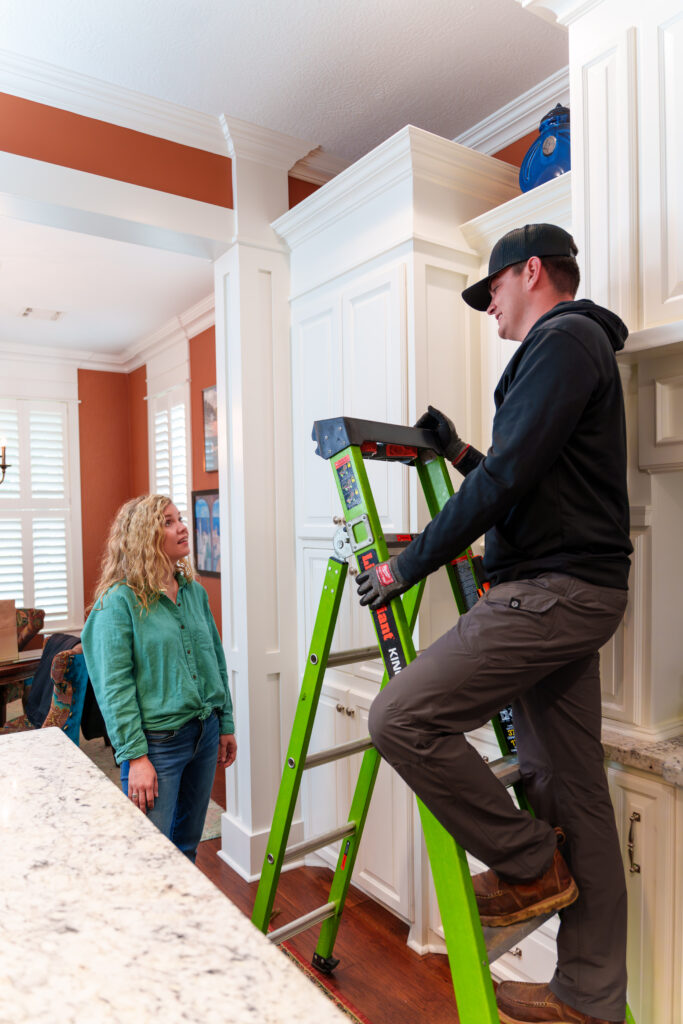
You tell us “the kitchen lights flicker when the dryer runs.” We start with a question list: when did it start, did anything change (new appliance, remodel, storm), is it always the same lights, does it happen when other big loads run. Then we go to the panel.
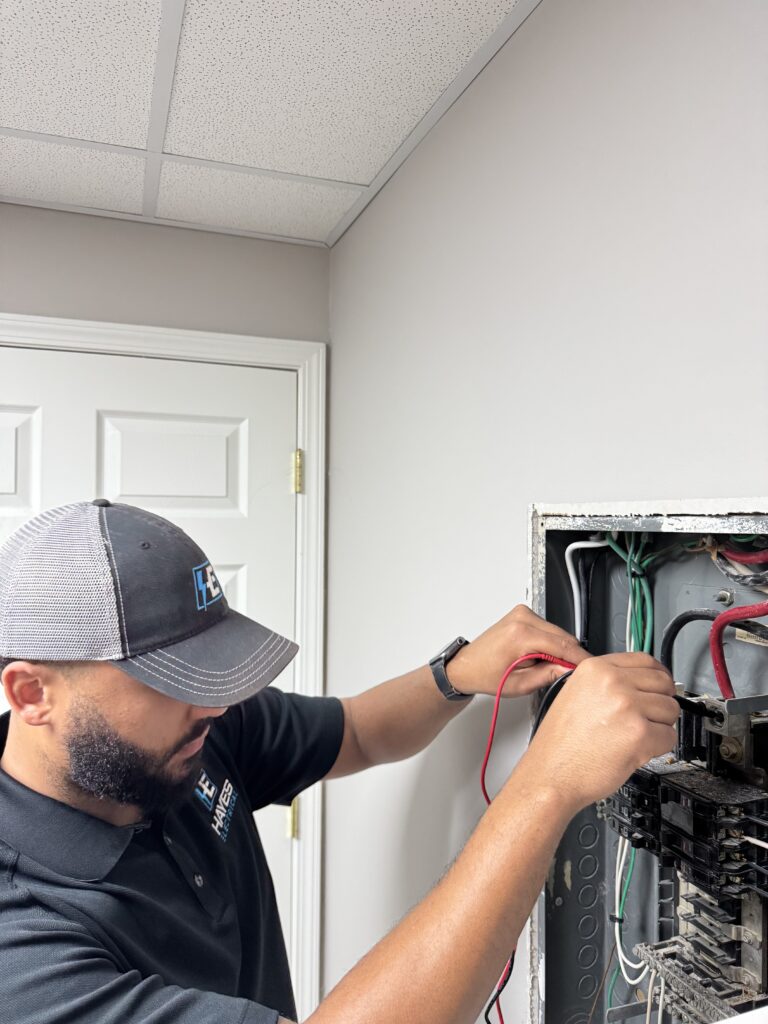
At the panel we run a thermal scan with the cover off (where safe), check that the breakers are torqued and not hot to the touch, look for any double-tap, look at the panel schedule, and read voltage on each leg. We check the bonding at the panel (NEC 250 requires the main bonding jumper at the service equipment, not at sub-panels). Half the diagnostics we do never leave the panel because the panel is where the answer is.
Common symptoms and what they usually mean
Flickering lights
A brief dip when an appliance starts is normal. Sustained flicker, flicker on a different circuit than the appliance, or flicker that follows daily patterns is usually a loose connection. The most common location is the lug at the meter base or at the service-entrance neutral. NEC 250.66 covers the grounding electrode conductor sizing, and a loose neutral on a 200A service is dangerous because the load shifts between legs.
Burning smell, no visible damage
An overheated splice that has not yet caught fire smells like burning plastic. The smell is the wire jacket cooking. Trace it with your nose first, then with a thermal camera. Common location: a junction box behind a switch or receptacle, especially if the box is overfilled per NEC 314.16.
Breaker that trips intermittently
If the breaker is a thermal-magnetic standard breaker, the most common cause is a load that exceeds 80 percent of the breaker rating for an extended time (the breaker is rated for 100 percent for short duration, 80 percent continuous). If the breaker is an AFCI, the trip might be a real arc fault, or it might be a nuisance trip from a noisy load (treadmill, vacuum, certain LED drivers). Early-generation AFCI breakers from 2002-2008 had a known nuisance-trip problem and newer designs handle the same loads without tripping.
Lost neutral
Half the house dim, half bright, electronics dying randomly. This is a service neutral problem and it is dangerous. The voltage on the surviving legs can swing from 50V to 170V. We diagnose with a meter at the panel and at the meter base. Sometimes the problem is on our side (a loose neutral lug at the panel), sometimes on the Entergy side (a corroded neutral at the transformer or the service drop splice).
Buzzing at the panel
Could be a failing breaker, could be bus arcing, could be a transformer hum from a sub-panel. We thermal-scan, identify the source, and quote the repair. On Zinsco and Federal Pacific panels, buzzing is a panel-replacement signal.
Tools we actually use
True-RMS digital meter (RMS matters because cheap meters lie on non-sinusoidal loads). Clamp meter for current readings without breaking the circuit. Thermal imager (the most useful diagnostic tool in the truck). Insulation tester (megger) for suspected damaged conductors. Recording meter for intermittent problems. Receptacle tester for wiring confirmation. Knock-test on conductors with a tone generator when we cannot find where a wire goes.
What you can do before we arrive
Write down when the problem happens, what is running when it happens, and what you have tried. Take a phone photo of the panel with the cover on (we want to see the brand and the main breaker rating). If a specific circuit is acting up, note which breaker it is on. None of this is required, but it cuts diagnostic time.